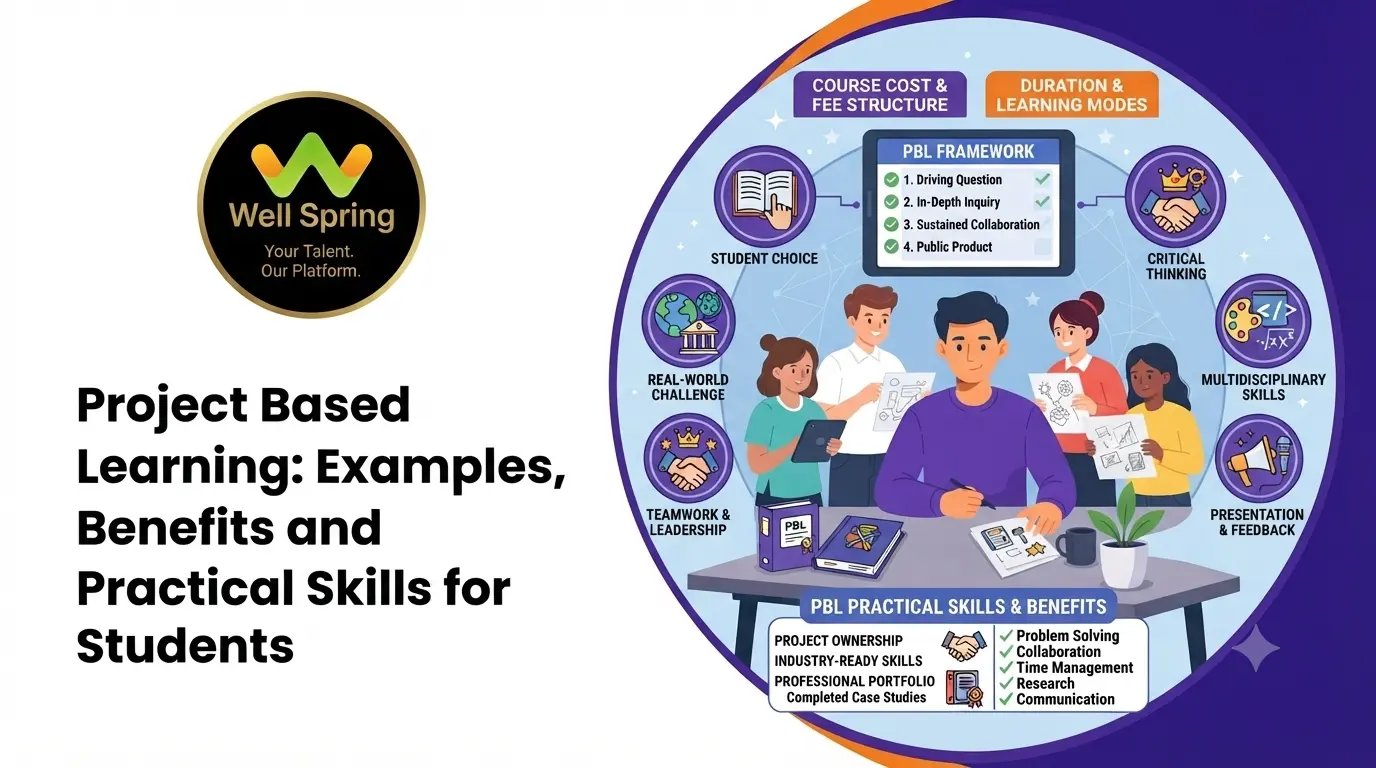

Project based learning is a practical approach to education where students learn by working on real-world problems, creating projects and applying what they study. Instead of depending only on textbooks and theoretical lessons, students use their knowledge to complete tasks, solve problems and develop useful skills.
For students, this learning method provides opportunities to understand concepts more clearly, improve problem-solving abilities and gain confidence in their work. From creating a simple website to developing a business plan, project based learning helps students connect classroom knowledge with practical situations.
In this article, we explore what project based learning means, its examples, benefits and how it helps students develop practical skills for their academic and professional growth.
1. What Is Project Based Learning?
Project based learning is an educational method in which students gain knowledge by actively working on a project over a period of time. They research a topic, identify a problem, plan their approach and create a final outcome using the knowledge they have learned.
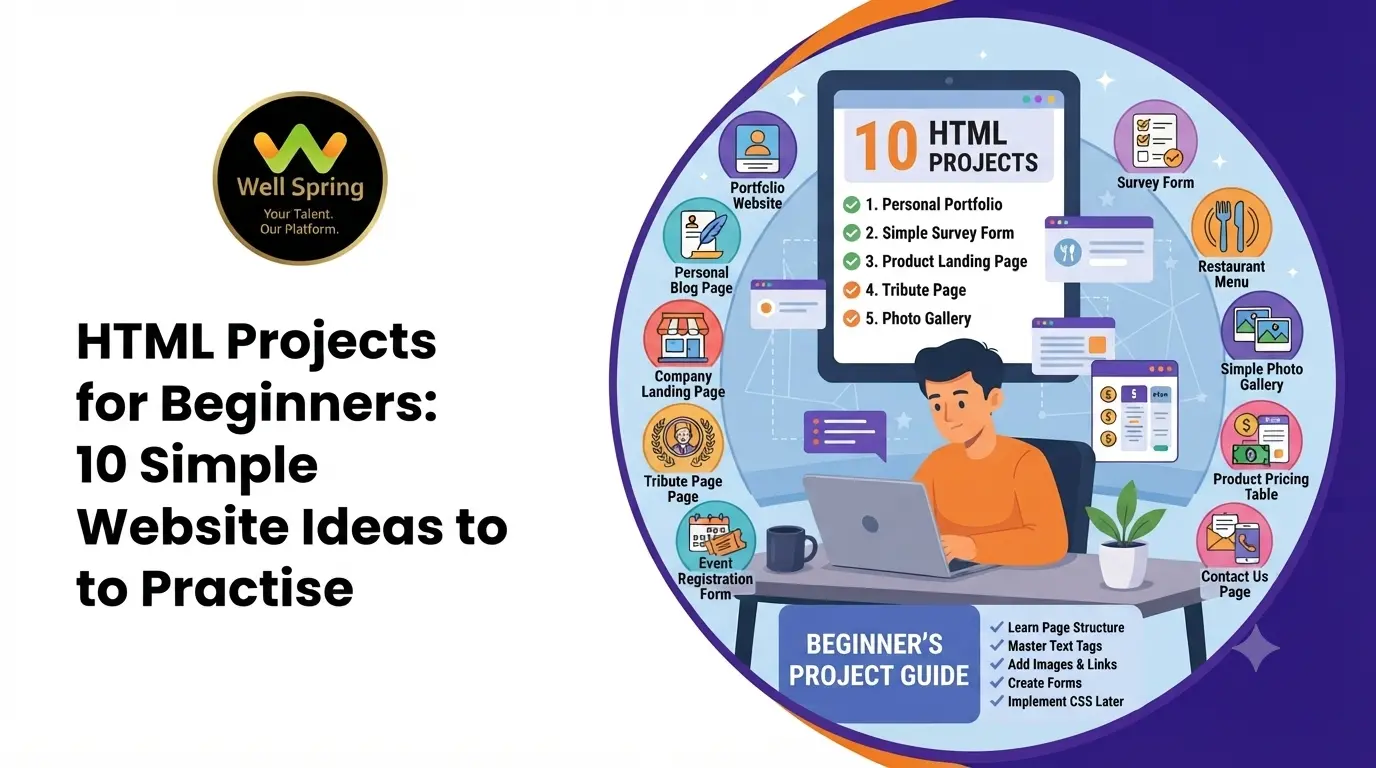
For example, a computer science student can understand HTML and CSS through classroom lessons. By creating a personal portfolio website, the student can apply those concepts and understand how website elements work together.
This approach makes learning more interactive because students participate in the process rather than simply memorising information.
Some common activities involved in project based learning include:
- Identifying a problem or project topic.
- Researching information and understanding the requirements.
- Planning the project and dividing it into smaller tasks.
- Applying relevant knowledge and technical skills.
- Testing the work and correcting mistakes.
- Presenting the completed project.
2. Project Based Learning Examples for Students
Students from different educational backgrounds can use project based learning to understand subjects and improve their practical abilities. The type of project depends on their interests, academic subjects and existing knowledge.
Here are some project based learning examples for students.
2.1 Personal Portfolio Website
Students interested in web development can create a personal portfolio website using HTML, CSS and JavaScript.
The project can include:
- A homepage introducing the student.
- An education and skills section.
- A project portfolio.
- A contact form.
- A responsive website layout.
Through this project, students understand website structure, styling, basic programming and responsive design.
2.2 Student Attendance Management System
A student attendance management system is a useful project for understanding how software applications organise information.
Students can create a basic application that records student details, attendance dates and attendance reports.
This project helps learners understand database management, data organisation, application logic and basic software development concepts.
2.3 Excel-Based Expense Tracker
Students can create an expense tracker using Microsoft Excel to record and analyse monthly expenses.
The project may include:
- Daily expense records.
- Monthly expense calculations.
- Category-wise spending.
- Charts and graphs.
- Monthly budget summaries.
It helps students practise spreadsheet formulas, data organisation and basic financial analysis.
2.4 Digital Marketing Campaign Plan
Students interested in marketing can develop a sample digital marketing campaign for a fictional business.
The project may include keyword research, social media content planning, audience identification and performance measurement.
It helps students understand digital marketing concepts and how businesses communicate with their target audiences.
2.5 Library Management System
A library management system is another useful project for students interested in programming and database concepts.
Students can design a basic system to manage book details, student information, book availability and borrowing records.
This project introduces database operations, logical thinking and application development.
2.6 Data Analysis Using Excel
Students can work with a sample dataset and use Excel to identify patterns, calculate totals and create visual reports.
For example, they can analyse monthly sales data and prepare charts showing product performance.
This activity improves analytical thinking, spreadsheet knowledge and data interpretation skills.
3. Benefits of Project Based Learning
Project based learning offers several benefits because students actively participate in the learning process. It helps them understand concepts, practise their knowledge and develop skills that are useful beyond the classroom.
3.1 Improves Practical Knowledge
Students get opportunities to apply concepts instead of only reading about them. Completing projects helps them understand how different topics work in practical situations.
3.2 Develops Problem-Solving Skills
Projects often involve challenges that require students to identify problems and find suitable solutions. This improves their ability to think logically and approach tasks independently.
3.3 Encourages Creative Thinking
Students can explore different ideas, experiment with solutions and develop their own approaches to completing a project.
3.4 Improves Time Management
Working on a project requires planning, setting deadlines and completing individual tasks. These activities help students understand how to manage their time effectively.
3.5 Builds Communication Skills
Students may need to explain their ideas, discuss project requirements and present their completed work. This helps improve their communication and presentation abilities.
3.6 Builds Confidence
Completing a project gives students a clear understanding of what they can achieve using their knowledge. It also encourages them to take on more challenging tasks.
4. Project Based Learning vs Theoretical Learning
Both practical and theoretical learning are important parts of education. Theoretical learning helps students understand fundamental concepts, while project based learning allows them to apply those concepts through activities and projects.
Here is a simple comparison:
| Theoretical Learning | Project Based Learning |
|---|---|
| Focuses on understanding concepts. | Focuses on applying concepts. |
| Often involves textbooks and lectures. | Involves activities and project work. |
| Students learn how something works. | Students practise creating or solving something. |
| Knowledge is mainly developed through lessons and study. | Knowledge is developed through research and practical activities. |
| Assessment may involve written examinations. | Assessment may involve project outcomes and presentations. |
For example, learning about website development through a textbook explains HTML tags, CSS properties and website structures. Creating a website helps students understand how these elements work together.
The most effective learning approach combines theoretical knowledge with practical application.
5. Skills Students Develop Through Project Based Learning
Project work helps students develop different skills depending on the activities they complete. These skills are useful for academic activities, personal development and future career opportunities.
5.1 Technical Skills
Students can improve their technical knowledge by working on projects related to programming, web development, spreadsheets, databases and other subject areas.
5.2 Critical Thinking
Analysing project requirements and evaluating different solutions encourages students to think carefully before making decisions.
5.3 Research Skills
Students learn to collect information, understand project requirements and identify useful resources before starting their work.
5.4 Teamwork
Group projects teach students how to share responsibilities, exchange ideas and work towards a common objective.
5.5 Communication Skills
Explaining project ideas, preparing reports and presenting results help students communicate information more clearly.
5.6 Adaptability
Projects do not always go according to plan. Students learn to make changes, correct mistakes and adjust their approach when challenges arise.
6. How to Start a Project Based Learning Activity
Students do not need advanced technical knowledge to begin project based learning. Starting with a simple and achievable project is often the best way to understand the process.
Follow these steps:
Step 1: Choose a Topic
Select a topic related to your subject, interests or area of study. Make sure the project is suitable for your current knowledge.
Step 2: Understand the Requirements
Identify what the project needs to achieve. Write down the main objectives and the expected outcome.
Step 3: Collect Information
Research the topic and identify the tools, resources and concepts required to complete the project.
Step 4: Create a Project Plan
Divide the project into smaller tasks. Set realistic deadlines and decide how each task will be completed.
Step 5: Start Building the Project
Apply the concepts you have learned and work through each task. Focus on understanding the process rather than simply completing it quickly.
Step 6: Test and Improve
Review your work, identify errors and make improvements. Testing helps you understand what works and what needs correction.
Step 7: Present Your Results
Prepare a short explanation of your project, including its purpose, working process and final outcome.
7. Common Challenges in Project Based Learning
Although project based learning has many advantages, students may experience some difficulties while completing projects.
Understanding these challenges can help students prepare better.
- Choosing a project: Beginners may find it difficult to select a suitable topic. Starting with a simple project can make the process easier.
- Lack of planning: Without a clear plan, students may struggle to complete tasks within the available time.
- Technical difficulties: Students may encounter errors or problems while using tools and software. Researching solutions and practising regularly can help.
- Managing multiple tasks: Large projects can become difficult to manage. Dividing the work into smaller activities makes it more manageable.
- Understanding mistakes: Errors are a normal part of practical learning. Reviewing mistakes helps students understand concepts more effectively.
8. How Project Based Learning Helps Students Prepare for the Future
Project based learning helps students become more familiar with applying knowledge to practical situations. It encourages independent thinking, problem-solving and continuous learning.
Students who regularly work on projects can develop a better understanding of their subject areas and recognise the skills they need to improve.
For example, a student who creates a website can better understand the process of planning, designing, developing and testing a digital product. Similarly, a student who analyses data using Excel can understand how information is organised and interpreted.
These experiences can also help students explain their abilities through project demonstrations, academic presentations and personal portfolios.
The main value of project based learning is not simply completing a project. It is understanding the process, learning from challenges and improving through practice.
Conclusion
Project based learning is a useful educational approach that helps students connect theoretical knowledge with practical activities. Through projects, students can explore new ideas, solve problems and develop skills that support their academic and personal growth.
Whether it is creating a website, analysing data or developing a simple application, every project provides an opportunity to learn something new. Starting with small projects and practising consistently can help students become more confident, independent and capable learners.