

Internships help students gain practical experience, develop professional skills, and understand how companies operate. They also give students an opportunity to apply classroom knowledge to real projects before starting their careers.
However, when searching for internship opportunities, students often face an important question: Should they choose a paid internship or an unpaid internship?
Both options can provide valuable learning experiences, but they differ in terms of financial support, responsibilities, working conditions, and overall benefits. Some students prefer paid internships because they receive financial compensation, while others consider unpaid internships for the practical experience and mentorship they provide.
Understanding Paid vs Unpaid Internship opportunities helps students make better decisions based on their financial situation, career goals, and learning expectations.
In this guide, we will explain the differences between paid and unpaid internships, their benefits, internship stipends, compensation factors, and how students can choose the right opportunity.
1. What Is a Paid Internship?
A paid internship is a structured work experience where students receive financial compensation for their contributions during the internship period.
The payment may be provided as a monthly stipend, hourly payment, or another agreed compensation arrangement. The amount depends on the organisation, internship role, duration, skills required, and responsibilities assigned to the intern.
Paid internships allow students to gain professional experience while receiving financial support.
For example, a computer science student joining a software development internship may receive a monthly stipend while working on development tasks, testing activities, or practical projects under professional guidance.
Common Features of Paid Internships
A paid internship may include:
- Monthly or hourly financial compensation.
- Practical assignments related to the internship role.
- Opportunities to work on real projects.
- Guidance from experienced professionals.
- Technical and professional skill development.
- Regular feedback and performance reviews.
- Exposure to workplace responsibilities.
- Opportunities to build a professional portfolio.
The exact structure depends on the organisation and the terms of the internship.
What Is an Internship Stipend?
An internship stipend is a financial payment provided to students during their internship period.
Unlike a full-time employee salary, a stipend is generally associated with a temporary learning or work experience. It may help students manage expenses such as transportation, food, internet access, and other daily requirements.
For example, an organisation may offer a monthly stipend to students participating in a digital marketing or web development internship.
Before accepting an opportunity, students should understand:
- Whether the stipend is monthly, weekly, or hourly.
- When the payment will be provided.
- Whether the amount is fixed or performance-based.
- Whether attendance or project completion affects payment.
- Whether any additional expenses are covered.
- What conditions apply if the internship ends early.
Having clear information about the internship stipend helps students understand the financial benefits of the opportunity.
2. What Is an Unpaid Internship?
An unpaid internship is a learning or work experience where students do not receive monetary compensation for their participation.
Instead of financial payment, the internship may focus on practical training, professional guidance, industry exposure, and skill development.
These opportunities are sometimes considered by students who want to explore a particular career field, develop technical abilities, or gain experience before applying for paid positions.
For example, a student interested in graphic design may join an unpaid internship to practise designing marketing materials, understand design workflows, and receive feedback from experienced professionals.
Common Features of Unpaid Internships
An unpaid internship may include:
- Practical learning opportunities.
- Industry-related assignments.
- Guidance from mentors.
- Exposure to professional tools and processes.
- Team collaboration.
- Skill development activities.
- Portfolio-building opportunities.
- Internship completion certificates, where provided.
However, these benefits are not automatically available in every unpaid internship. Students should check whether the organisation provides a structured learning programme and meaningful guidance.
Unpaid Internship Benefits
Although unpaid internships do not provide financial compensation, they may offer several learning benefits when they are properly structured.
1. Practical Skill Development
Students can practise the skills they have learned through academic courses and apply them to practical assignments.
For example, a web development student may work on website layouts, frontend components, or basic backend tasks.
2. Industry Exposure
Students can understand how professional teams communicate, manage projects, complete assignments, and handle deadlines.
3. Professional Mentorship
Some unpaid internships provide opportunities to learn from experienced professionals who guide students through practical tasks and explain industry practices.
4. Portfolio Development
Students may create projects or work samples that demonstrate their abilities to potential employers, subject to the organisation's permission and confidentiality requirements.
5. Career Exploration
An unpaid internship can help students understand whether a particular role or industry matches their interests before making long-term career decisions.
6. Workplace Communication
Students can improve their ability to communicate with mentors, teammates, and other professionals through regular discussions and project activities.
The value of an unpaid internship depends on the quality of training, supervision, project exposure, and learning opportunities rather than the absence of payment alone.
3. Difference Between Paid and Unpaid Internship
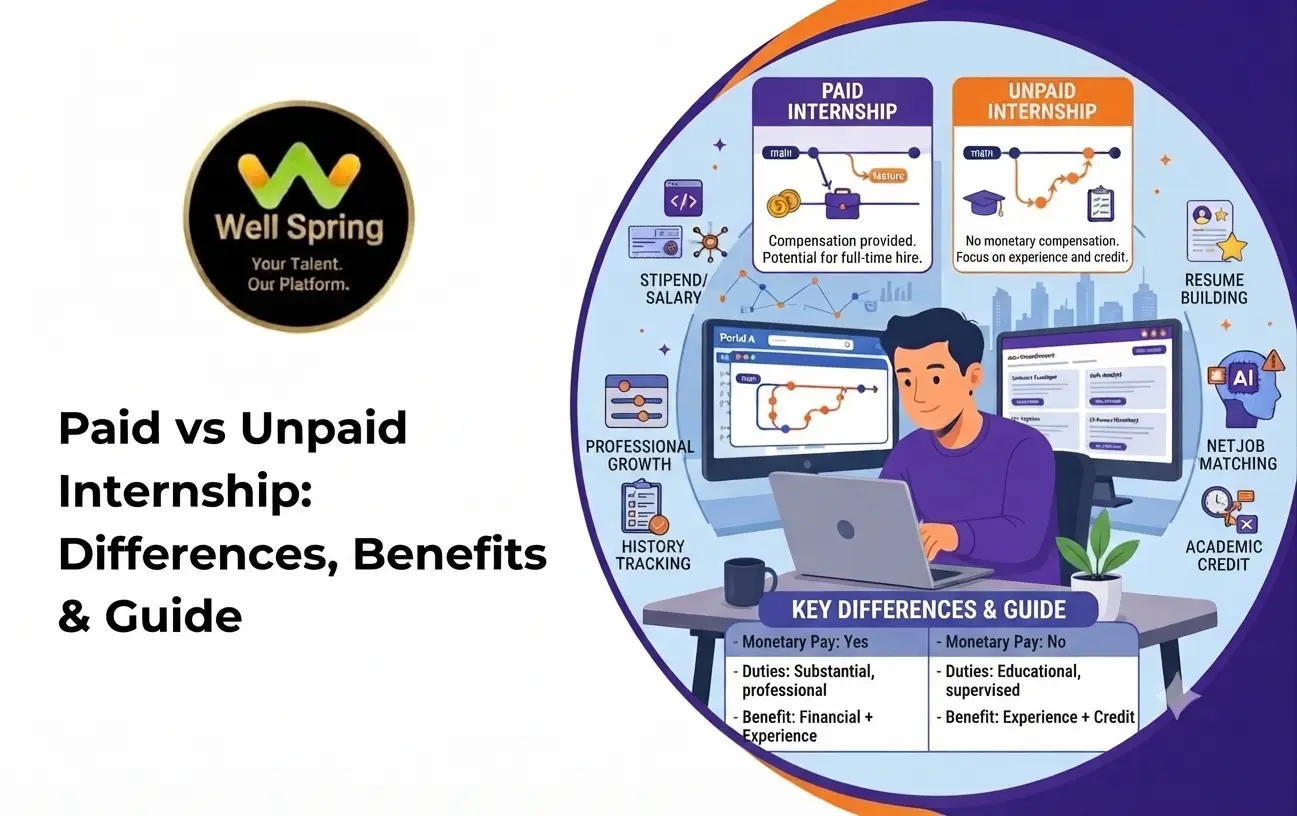
The main difference between paid and unpaid internships is financial compensation. However, students should also compare learning opportunities, mentorship, responsibilities, and working conditions before making a decision.
The following table explains the difference between paid and unpaid internship opportunities.
| Comparison Factor | Paid Internship | Unpaid Internship |
|---|---|---|
| Financial Compensation | Provides a stipend or other agreed payment | Does not provide monetary compensation |
| Learning Opportunities | Can include practical training and project work | Can include practical training and project work |
| Financial Support | Helps students manage some personal expenses | Students generally manage their own expenses |
| Responsibilities | Depends on the role and organisation | Depends on the role and organisation |
| Mentorship | May provide professional guidance | May provide professional guidance |
| Skill Development | Supports practical and professional learning | Supports practical and professional learning |
| Career Exposure | Provides industry experience | Provides industry experience |
| Portfolio Development | May include project-based work | May include project-based work |
| Best Suited For | Students seeking experience with financial support | Students prioritising learning when financial conditions permit |
Key Differences Explained
1. Financial Support
Paid internships provide financial compensation that can help students manage internship-related expenses. Unpaid internships do not offer this financial benefit.
2. Learning Experience
Both types of internships can provide valuable learning opportunities. The actual experience depends on the quality of assignments, training structure, and mentor support.
3. Financial Responsibility
Students joining unpaid internships need to consider transportation, food, accommodation, and other expenses. Paid internships may help reduce some of these financial responsibilities.
4. Work Responsibilities
The tasks assigned to interns depend on the organisation and internship role. Payment alone does not determine whether an internship provides meaningful responsibilities.
5. Career Development
Both paid and unpaid internships can support career development when students gain relevant skills, complete practical projects, and receive useful feedback.
Therefore, students should evaluate the complete internship experience instead of choosing an opportunity based only on whether it offers payment.
4. Paid Internship Benefits for Students
Paid internships offer students an opportunity to develop professional skills while receiving financial compensation.
For students who want to gain work experience without managing all internship-related expenses independently, paid opportunities can be especially useful.
Benefits of Paid Internships for Students
1. Financial Independence
Receiving an internship stipend helps students manage some personal expenses without depending entirely on family support.
2. Practical Industry Experience
Paid internships can provide opportunities to work on practical assignments and understand how professional responsibilities are managed.
3. Better Financial Planning
Students can use their internship compensation to manage transportation, meals, internet expenses, and other requirements.
4. Professional Skill Development
Working on assigned tasks helps students improve technical knowledge, communication, teamwork, and problem-solving abilities.
5. Increased Professional Confidence
Completing practical responsibilities and receiving feedback can help students become more confident about their abilities.
6. Resume and Portfolio Development
Students can include relevant internship experience and permitted project work in their resumes and portfolios.
7. Understanding Workplace Expectations
Paid internship opportunities can introduce students to deadlines, reporting structures, quality standards, and professional responsibilities.
However, these benefits depend on the actual internship structure. A paid opportunity should still provide meaningful learning rather than focusing only on completing routine tasks.
5. Paid Internship vs Unpaid Internship: Which Provides Better Learning Opportunities?
Many students assume that paid internships automatically provide better professional experience than unpaid internships. However, this is not always true.
The quality of an internship depends on what students learn, the projects they complete, and the guidance they receive.
For example, consider two students.
Student A joins a paid internship but spends most of the time performing repetitive tasks without proper guidance.
Student B joins a structured unpaid internship where mentors provide practical assignments, review completed work, and explain professional workflows.
In this situation, Student B may gain more practical knowledge despite not receiving financial compensation.
Similarly, a well-structured paid internship that combines financial support, live projects, and professional mentorship can provide both learning and financial benefits.
Factors That Determine Internship Quality
Before choosing between paid and unpaid opportunities, students should evaluate:
- Project Exposure: Does the internship provide opportunities to work on practical projects?
- Mentor Support: Are experienced professionals available to guide students?
- Training Structure: Is there a clear learning plan?
- Skill Development: Will students gain skills related to their career goals?
- Feedback: Are assignments reviewed and improvements explained?
- Work Environment: Does the organisation provide a professional learning environment?
- Career Relevance: Will the experience support future job applications?
A meaningful internship should help students understand their chosen field and improve their ability to handle professional responsibilities.
6. What Factors Affect Internship Compensation?
Internship compensation varies between organisations and depends on several factors.
There is no single stipend amount that applies to every internship. Students should understand how compensation is determined before accepting an offer.
1. Internship Role
Different internship roles require different skills and responsibilities.
For example, software development, data analytics, digital marketing, graphic design, and business operations internships may have different compensation structures.
2. Required Skills
Internships that require specialised technical knowledge or specific tools may offer different compensation compared with opportunities involving basic learning activities.
3. Internship Duration
The duration of the programme can influence the payment arrangement. Some organisations offer monthly stipends, while others use fixed project-based or hourly arrangements.
4. Organisation and Project Requirements
Compensation can depend on the organisation's policies, available budget, project requirements, and business needs.
5. Student Performance
Some internship programmes have eligibility or performance conditions for paid opportunities. Students should understand these conditions before joining.
6. Working Hours and Responsibilities
The expected working schedule and responsibilities should be clearly explained. Students should compare the time commitment with the compensation and learning benefits.
Understanding these factors helps students evaluate whether the internship provides reasonable financial and professional value.
7. How to Choose the Right Internship
Choosing an internship should involve more than comparing stipend amounts. Students need to identify opportunities that support their education, professional interests, and future career plans.
Here are some important steps to follow when selecting an internship.
Step 1: Identify Your Career Goals
Start by understanding the field you want to explore.
For example:
- Computer science students may consider software development or Python internships.
- Business students may explore marketing or business operations.
- Design students may choose graphic design or UI/UX internships.
- Engineering students may look for practical technical project opportunities.
Selecting a relevant field helps students gain experience that supports their future career.
Step 2: Compare Paid and Unpaid Opportunities
Review the financial and learning benefits of each opportunity.
Consider the stipend, travel expenses, working hours, project exposure, and mentorship support before making a decision.
Step 3: Check the Training Structure
Understand whether the internship includes structured assignments, practical activities, project reviews, and regular guidance.
Avoid choosing an opportunity based only on the promise of a certificate.
Step 4: Review the Project Opportunities
Check whether interns can participate in meaningful projects related to their chosen field.
Practical work helps students understand how their knowledge is applied in professional environments.
Step 5: Understand the Internship Terms
Before accepting an offer, confirm:
- Internship duration.
- Working hours.
- Stipend or compensation details.
- Assigned responsibilities.
- Training and mentorship arrangements.
- Attendance requirements.
- Certificate eligibility.
- Any additional conditions.
Step 6: Consider Your Financial Situation
Students should calculate their expected expenses before joining an internship.
If an unpaid opportunity requires significant travel or other expenses, consider whether the learning benefits justify the financial commitment.
Step 7: Evaluate Future Career Benefits
Think about how the internship will contribute to your resume, technical abilities, professional confidence, and future employment opportunities.
The right internship should provide useful experience that you can explain and demonstrate during job interviews.
8. Are Unpaid Internships Worth It for College Students?
Unpaid internships can be worth considering when they provide genuine learning opportunities and fit the student's financial situation.
For college students who have limited practical experience, a structured internship can help them understand professional responsibilities and develop industry-related skills.
However, students should not assume that every unpaid internship is valuable.
Before accepting an unpaid opportunity, check whether:
- The organisation provides a clear training structure.
- Mentors are available to guide interns.
- Students receive practical assignments.
- The internship has defined learning objectives.
- The expected working hours are reasonable.
- The experience is relevant to the student's career goals.
- The programme complies with applicable laws and regulations.
Students should also be careful about opportunities that demand long working hours, charge unexplained fees, or promise employment without clear conditions.
An internship should provide a genuine learning experience. Students should not accept unclear or exploitative arrangements simply to obtain a certificate.
9. Paid vs Unpaid Internship: Which Should Students Choose?
There is no single answer for every student. The right choice depends on financial needs, career goals, internship quality, and available opportunities.
Choose a Paid Internship If:
- You want financial support during your internship.
- You need help managing daily expenses.
- You have found an opportunity with relevant practical work.
- You want to gain experience while receiving compensation.
- The responsibilities and payment conditions are clearly explained.
Choose an Unpaid Internship If:
- The programme provides meaningful practical learning.
- You receive proper mentor guidance.
- The projects are relevant to your career interests.
- The internship duration and working hours are manageable.
- You can afford the associated expenses.
- The learning benefits justify your time and financial commitment.
A Simple Decision Example
Consider a student who wants to become a web developer.
They receive two internship opportunities:
Opportunity A – Paid Internship
- Offers a monthly stipend.
- Provides practical website development assignments.
- Includes mentor guidance.
- Offers opportunities to participate in project reviews.
Opportunity B – Unpaid Internship
- Does not provide a stipend.
- Includes structured web development training.
- Provides practical exercises and feedback.
- Offers opportunities to build a portfolio.
The student should compare the quality of both programmes, the actual responsibilities, expected expenses, and career relevance.
If both opportunities offer similar learning quality, the paid internship may provide an additional financial advantage.
However, if the unpaid opportunity offers significantly better practical training and the student can manage the expenses, it may also be worth considering.
The best decision is the one that balances learning, financial needs, and future career development.
10. How Well Spring Talent Solutions Helps Students Gain Internship Experience
At Well Spring Talent Solutions, Trichy, internship programmes focus on helping students connect academic knowledge with practical industry experience.
Students can explore different internship domains based on their interests, including software development, Python, full stack development, digital marketing, artificial intelligence, graphic design, mobile app development, and other technology-related fields.
The internship experience may include:
- Practical assignments and industry-focused training.
- Live project exposure.
- Professional mentoring.
- Team collaboration.
- Technical discussions and code reviews.
- Weekly performance reviews.
- Portfolio development.
- Internship certification.
- Career guidance and interview preparation.
Paid Internship Opportunities at Well Spring
Selected internship programmes may include paid opportunities depending on project availability, partner requirements, candidate performance, and applicable programme conditions.
Paid opportunities are available only to eligible candidates. Compensation details and eligibility should be confirmed with the organisation before joining.
Students can explore the available Internship Programs in Trichy to understand the domains, practical learning opportunities, and programme details.
Whether a student chooses a paid or unpaid opportunity, the focus should remain on developing relevant skills, gaining practical experience, and preparing for future employment.
Conclusion
Choosing between a paid and unpaid internship is an important decision for students preparing to enter the professional world.
Paid internships provide financial support along with opportunities to develop practical skills and gain industry exposure. Unpaid internships can also provide valuable learning experiences when they include structured training, mentorship, and meaningful project work.
Before accepting an opportunity, students should compare the compensation, learning structure, responsibilities, working hours, and career benefits.
Instead of choosing an internship based only on its payment status, focus on the skills you can develop and the experience you can gain. A well-structured internship can help you build professional confidence and prepare for your future career.