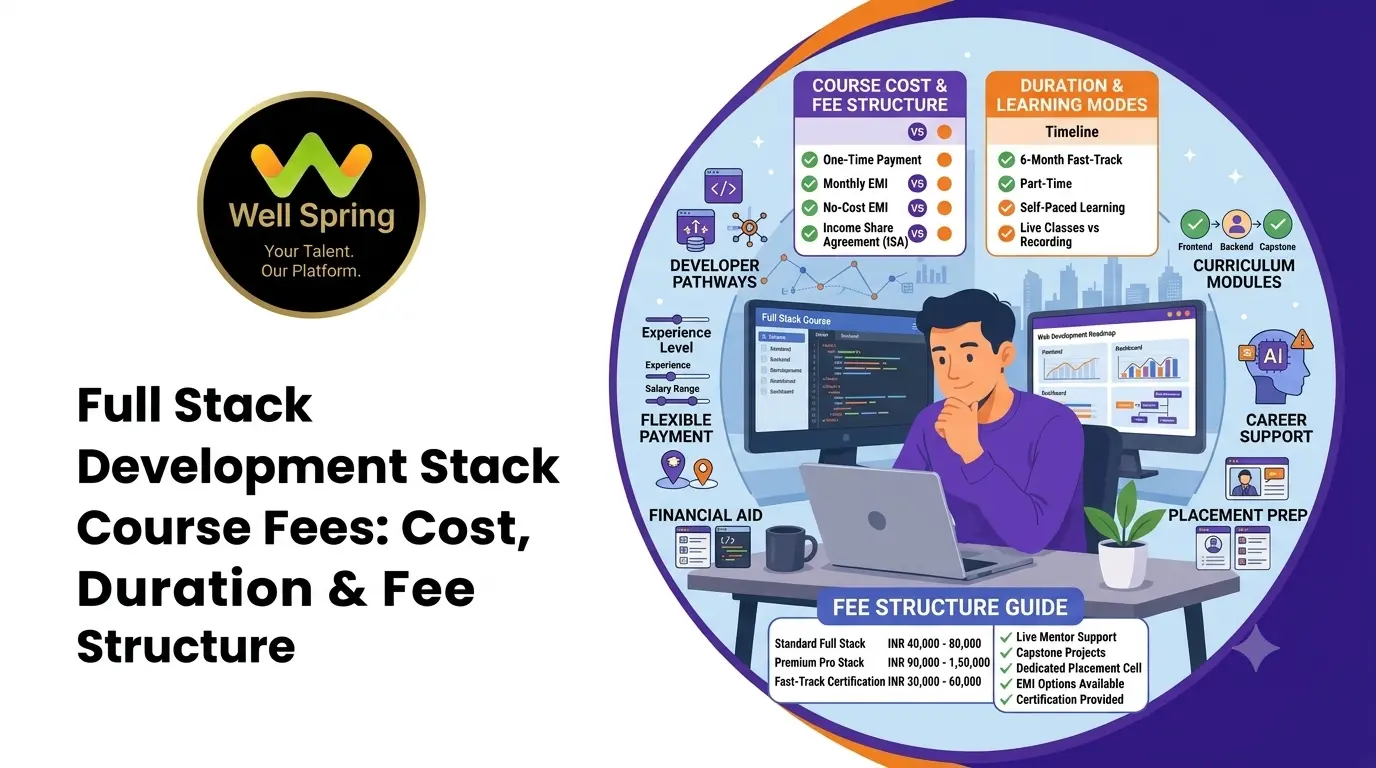

Understanding Full Stack Development Course Fees is an important step for students and aspiring developers who are planning to learn web application development. Before selecting a training programme, learners often compare course costs, training duration, technologies included, practical learning facilities and additional career support.
However, the total cost of a full stack development programme can vary depending on the curriculum, technology stack, number of training hours, teaching method and facilities provided by the training institute. Some programmes focus on fundamental web development concepts, while others include advanced frameworks, database management, API integration and complete application development.
Apart from tuition fees, students should also understand whether registration, certification, learning materials, project support and placement assistance are included in the advertised price.
This guide explains the factors that influence full stack development training fees, what students should check before making a payment, how course duration affects the overall cost and how to compare different programmes.
1. What Are Full Stack Development Course Fees?
Full stack development course fees refer to the total amount charged by a training institute for teaching frontend and backend web development through a structured learning programme.
Full stack development involves building different parts of a web application, including the user interface, server-side functionality, database operations and communication between application components.
The overall course cost depends on the depth of the syllabus, technologies covered, training hours, practical sessions and additional learning facilities.
A typical fee structure may include:
- Instructor-led programming sessions.
- Frontend and backend development lessons.
- Database fundamentals and application connectivity.
- Practical coding exercises and assignments.
- Application development projects.
- Trainer guidance and doubt-clearing sessions.
- Learning materials and assessments.
- Certification, where included.
- Career preparation services, where offered.
Not every programme includes all these facilities. Therefore, students should request a detailed breakdown of the course fee before enrolling.
2. What Factors Affect Full Stack Development Training Fees?
Full Stack Development Training Fees can differ considerably between training providers because each programme offers a different learning experience.
Understanding the factors that influence pricing helps students compare programmes based on their actual value rather than selecting an option only because it has a lower advertised price.
Course Curriculum and Technology Stack
The technologies included in a programme can influence its overall cost.
A fundamental curriculum may introduce HTML, CSS, JavaScript and basic database concepts. More comprehensive programmes may cover frontend frameworks, backend programming languages, application frameworks, APIs and database integration.
The technology stack also influences the depth of training required. Learning a complete application development workflow may require more training hours than studying individual programming concepts.
When comparing programmes, check whether the syllabus covers the technologies and practical skills relevant to your learning objectives.
Training Hours and Course Structure
The total number of instructor-led sessions and practical hours can affect the fee structure.
A programme with additional coding exercises, project development sessions, individual feedback and mentor guidance may have a different cost from a short introductory course.
Students should compare:
- Total number of training hours.
- Number of weekly classes.
- Practical session availability.
- Assignment and project review time.
- Doubt-clearing facilities.
- Access to trainers outside regular sessions.
The advertised course duration alone does not explain the complete learning experience. Actual training hours are equally important.
Online and Classroom Learning Methods
The training format is another factor that may influence Full Stack Web Development Course Fees.
Online programmes may provide live instructor-led classes, recorded lessons or a combination of both. Classroom programmes generally provide face-to-face interaction and direct access to trainers during scheduled sessions.
Before selecting a format, consider:
- Live trainer interaction.
- Availability of recorded lessons.
- Practical coding assistance.
- Access to learning resources.
- Class schedules and flexibility.
- Technical support.
The right learning format depends on your schedule, learning preferences and the level of guidance you require.
Practical Projects and Mentorship
Practical experience is important when learning full stack development because programming concepts become easier to understand through implementation.
Programmes that include application development exercises, database integration, API connectivity and project reviews may require additional training resources.
Check whether the course includes individual project assignments, team-based activities, code reviews and opportunities to receive feedback from trainers.
These facilities can contribute to the overall value of a training programme.
Certification and Additional Learning Facilities
Some institutes include certification and learning resources within the tuition fee, while others charge separately.
Additional facilities may include:
- Course materials and programming resources.
- Internal assessments.
- Certification examinations.
- Practice assignments.
- Project evaluation.
- Additional technical sessions.
Students should verify which facilities are included and whether any separate charges apply.
3. What Is Included in Full Stack Web Development Course Fees?
When comparing Full Stack Web Development Course Fees, students should understand exactly what they receive for the amount they pay.
A lower advertised fee does not necessarily mean better value. Similarly, a more expensive programme does not automatically provide superior training.
The following table explains the major components students should check.
| Course component | What to verify |
|---|---|
| Training sessions | Total classes and instructor-led hours |
| Learning materials | Notes, resources and practice exercises |
| Programming assignments | Number and type of coding exercises |
| Practical projects | Individual or group project opportunities |
| Trainer assistance | Doubt clarification and code reviews |
| Assessments | Internal tests and programming evaluations |
| Certification | Eligibility and issuing authority |
| Career preparation | Resume guidance and mock interviews |
| Placement assistance | Available services and eligibility conditions |
Check for Additional Charges
Apart from the main tuition amount, certain programmes may have additional expenses.
These can include:
- Registration charges.
- Examination fees.
- Certification charges.
- Software subscriptions, where applicable.
- Additional learning materials.
- Taxes, where applicable.
Ask for a complete fee quotation that clearly identifies included and excluded expenses.
Understanding these details helps prevent unexpected costs during the learning period.
4. How Much Does a Full Stack Development Course Cost?
There is no single standard price for every full stack development programme in India. Full Stack Developer Course Cost varies according to the course structure, training format, technology stack, practical facilities and additional services.
For example, an introductory programme focusing on programming fundamentals may have a different fee structure from a comprehensive programme that includes advanced frameworks, application development, database integration and deployment.
Students should understand the following programme categories when comparing prices.
Basic Programme
A basic programme generally introduces the fundamental concepts required to understand web development.
Its learning structure may focus on:
- Basic web development concepts.
- Introduction to programming.
- Website structure and styling.
- JavaScript fundamentals.
- Basic database concepts.
The cost depends on the number of training sessions and learning resources included.
Intermediate Programme
An intermediate programme may cover additional development concepts and more practical implementation.
Its learning structure may include:
- Frontend framework fundamentals.
- Backend programming concepts.
- Database connectivity.
- API fundamentals.
- Application functionality.
- Practical coding assignments.
The overall fee may differ depending on the depth of each subject and the number of practical sessions.
Comprehensive Programme
A comprehensive programme generally provides broader coverage of frontend, backend and application development workflows.
It may include:
- Multiple development technologies.
- Advanced programming concepts.
- Database design and integration.
- API development.
- Application testing.
- Version control.
- Deployment fundamentals.
- Complete application projects.
The total cost depends on the curriculum, training hours, project support and additional facilities.
How to Compare Course Prices
Instead of relying on an advertised price alone, compare the following details:
- Total course fee.
- Number of instructor-led hours.
- Complete syllabus coverage.
- Practical project opportunities.
- Trainer availability.
- Certification charges.
- Additional learning expenses.
- Payment flexibility.
- Career support facilities.
Students should request the latest fee quotation directly from the institute because pricing, discounts and batch-related offers can change.
5. Full Stack Course Duration and Its Impact on Fees
Full Stack Development Course Duration is another important factor when evaluating the total training cost.
The duration depends on the number of technologies covered, weekly class schedules, practical training hours and the depth of the curriculum.
A short introductory programme may focus on basic programming concepts, while a comprehensive programme requires additional time for backend development, databases, application integration and practical projects.
The following table illustrates how different programme structures may vary.
| Programme structure | Learning focus |
|---|---|
| Short-term | Programming fundamentals and basic web development |
| Intermediate | Frontend frameworks, backend concepts and databases |
| Comprehensive | Complete application development and practical implementation |
These are general learning categories rather than fixed duration commitments.
Why Does Course Duration Matter?
Course duration can influence the overall fee because longer programmes may include additional classes, assignments, practical sessions and trainer support.
However, a longer course is not automatically better.
Students should evaluate whether the additional time provides meaningful learning opportunities.
Consider these questions:
- Are additional training hours included?
- Is there sufficient time for practical coding?
- Are projects reviewed individually?
- Can students clarify doubts with trainers?
- Does the programme provide enough time to understand complex concepts?
Comparing the actual training structure helps learners understand the relationship between course duration and fees.
6. How to Plan Your Budget for Full Stack Development Training
Before paying Full Stack Development Training Fees, students should calculate the complete cost of learning rather than considering tuition alone.
A clear budget helps learners avoid unexpected expenses and select a programme that fits their financial requirements.
Calculate the Total Tuition Amount
Start by understanding the complete tuition fee.
Ask whether the advertised amount covers the entire programme or only a particular module.
Check whether the course has separate charges for advanced topics, additional sessions or project support.
Check Registration and Certification Expenses
Some training providers may charge separately for registration, examinations or certificates.
Confirm whether these expenses are included in the original quotation.
Also understand whether certification is provided after completing the programme or after meeting additional assessment requirements.
Understand Instalment and EMI Options
If the full course amount cannot be paid immediately, ask whether the institute offers instalment-based payment options.
Before selecting an instalment plan, check:
- Initial payment amount.
- Number of instalments.
- Payment due dates.
- Additional processing charges.
- Refund and cancellation conditions.
Choose a payment arrangement that is manageable within your budget.
Consider Additional Learning Expenses
Students may also need to consider expenses related to internet access, computer equipment, optional software subscriptions and additional learning resources.
These costs depend on the student's existing facilities and the requirements of the selected programme.
Preparing a complete budget makes it easier to compare different learning options.
7. Does Full Stack Course Fees Include Placement Assistance?
Some students consider career support when comparing Full Stack Developer Training Cost.
However, placement assistance and guaranteed employment are different.
Placement assistance refers to services that help learners prepare for recruitment processes and explore relevant employment opportunities. Whether these services are included in the course fee depends on the institute and programme.
Resume Preparation
Resume guidance can help students present their technical skills, academic background, projects and practical experience clearly.
Ask whether resume reviews or individual feedback sessions are included.
Technical Interview Preparation
Technical interview preparation may involve programming questions, problem-solving exercises, coding assessments and discussions about development concepts.
Students should check whether mock interviews and technical evaluation sessions are provided.
Communication and Interview Guidance
Some programmes also offer communication practice and interview guidance to help students explain their technical knowledge more effectively.
The availability of these facilities should be confirmed before enrolment.
Job Application Guidance
Career support may include information about relevant openings, application preparation and interview opportunities through employer connections, where available.
Placement Assistance vs Job Guarantee
Placement assistance does not mean that employment is guaranteed after completing a course.
Recruitment decisions depend on several factors, including technical knowledge, practical ability, communication, interview performance and employer requirements.
Before paying for any programme, ask for written details about the placement services offered, eligibility requirements and whether any separate placement charges apply.
8. How to Compare Full Stack Course Fees Before Enrolling
Comparing different fee quotations requires more than checking the final amount.
Students should evaluate the training structure, facilities and payment conditions to understand which programme offers suitable learning value.
Compare the Total Training Hours
Two programmes may advertise similar durations but offer different numbers of actual classroom and practical hours.
Ask for a breakdown of instructor-led sessions, lab activities, assignments and project reviews.
Review the Complete Fee Structure
Request a written quotation that explains the tuition amount, registration charges, certification expenses and any additional costs.
This makes it easier to compare the actual amount payable.
Evaluate Practical Learning Opportunities
Practical assignments and project development help learners apply programming concepts.
Check whether the programme includes individual coding exercises, application development tasks and feedback from trainers.
Understand Trainer Support
Trainer availability can make a difference when learners encounter programming errors or have difficulty understanding technical concepts.
Ask about doubt-clearing sessions, code reviews and individual guidance.
Check Payment and Refund Policies
Before making a payment, review the instalment schedule, cancellation conditions, refund policy and any applicable additional charges.
Keep a copy of the payment receipt and course terms for future reference.
Compare the Overall Learning Value
The most suitable programme is not necessarily the cheapest or most expensive.
Consider the curriculum, training hours, practical facilities, trainer guidance and career support together before making a decision.
9. Is Full Stack Development Training Worth the Investment?
Full stack development training can be a useful learning investment for individuals who want to understand how modern web applications are created.
However, the value of a programme depends on how effectively learners develop their technical knowledge and apply it through regular practice.
A structured learning experience can help students:
- Understand frontend and backend development.
- Learn how application components communicate.
- Work with databases and application data.
- Practise programming and debugging.
- Understand API integration.
- Develop practical application projects.
- Build a portfolio of technical work.
- Improve problem-solving skills.
Practical Knowledge Beyond Classroom Learning
Paying course fees is only one part of the learning process.
Students should spend additional time practising programming, reviewing concepts, solving coding problems and developing independent projects.
Practical experience also helps learners understand how different technologies work together.
For students interested in gaining additional project exposure, a separate Full Stack Development Internship in Trichy provides another pathway to explore practical development experience.
Consider Long-Term Learning Benefits
Technology continues to evolve, so developers need to update their knowledge regularly.
A good learning foundation can help students understand new frameworks, development tools and application technologies as they progress in their careers.
Therefore, when evaluating course fees, consider the quality of learning, practical opportunities and knowledge gained rather than focusing only on the initial price.
Conclusion
Understanding Full Stack Development Course Fees, training duration and the complete fee structure helps students make informed decisions before choosing a web development learning programme.
Instead of comparing training providers only by their advertised prices, learners should evaluate the technologies covered, total training hours, practical learning opportunities, trainer guidance, certification and additional facilities.
It is equally important to understand payment conditions, additional expenses and the actual career support included in the programme.
A suitable learning investment should provide a clear curriculum, opportunities to practise programming and sufficient guidance to develop practical technical skills.
By comparing these factors carefully, students can choose a full stack development learning programme that aligns with their career goals, learning expectations and available budget.