
Completing a Bachelor of Business Administration (BBA) can open career opportunities in management, marketing, finance, sales, and business operations. However, if you are interested in technology, you may wonder whether you can enter the IT industry after graduation. The good news is that you can learn full stack development after BBA, even if you do not have a computer science background.
Full stack development combines front-end development, back-end programming, and database management to build functional websites and web applications. With structured learning, regular coding practice, and practical projects, BBA graduates can develop the technical skills needed to explore software development careers.
In this guide, you will learn about IT courses after BBA, full stack development eligibility, essential programming skills, career opportunities, and how to get started as a beginner.
1. Can I Learn Full Stack Development After BBA?
Yes, BBA graduates can learn full stack development. You generally do not need a computer science degree to start learning web development. Many beginners enter the field through practical training, online learning, structured courses, and independent projects.
Your BBA background may also help you understand business requirements, customer needs, communication, and project coordination. These skills can be useful when developing websites and applications for businesses.
To get started, focus on learning:
- HTML and CSS for webpage structure and styling
- JavaScript for interactive website features
- Front-end frameworks such as React
- Back-end technologies such as Node.js
- Databases such as MySQL or MongoDB
- Git and GitHub for version control
- Basic software testing and deployment
The key is to learn each concept step by step and apply it through practical coding exercises.
2. Why Choose Full Stack Development After BBA?
Full stack development can be an option for BBA graduates who want to transition into a technical career. Instead of limiting yourself to traditional business roles, you can develop programming skills and explore opportunities in the software industry.
Some potential benefits include:
- Career flexibility: Explore web development, software development, and related technical roles.
- Practical skills: Learn to create websites and web applications.
- Business knowledge: Apply your understanding of business processes to software projects.
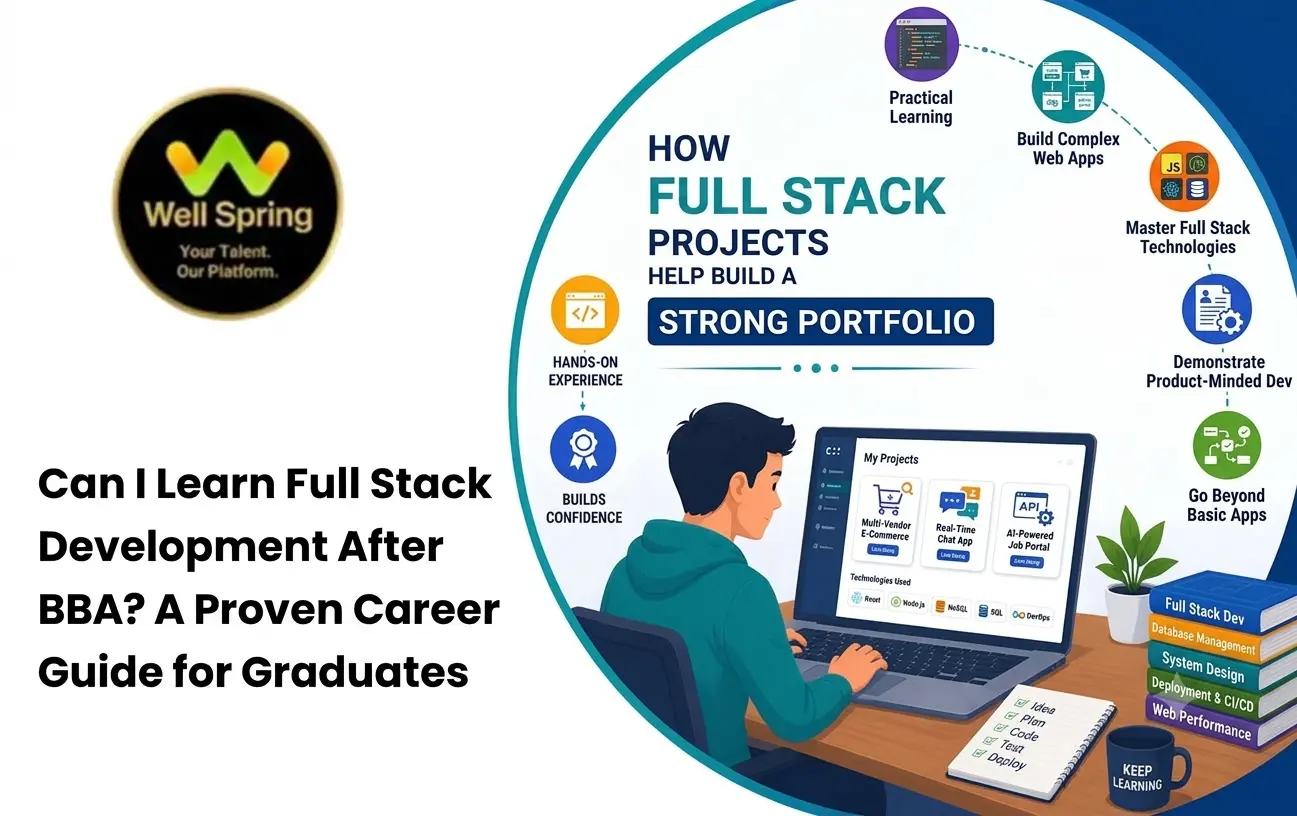
- Project-based learning: Build a portfolio that demonstrates your technical abilities.
- Continuous learning: Develop new skills as web technologies evolve.
Remember that completing a course alone does not guarantee a job. Your coding ability, project portfolio, problem-solving skills, and interview preparation also matter.
3. IT Courses After BBA: Which Course Should You Choose?
If you are searching for IT courses after BBA, your choice should depend on your interests, career goals, and willingness to learn technical skills.
Here are some options to consider:
| IT course | What you can learn |
|---|---|
| Full Stack Development | Front-end, back-end, databases, and web application development |
| Web Development | Website design, development, and maintenance |
| Software Testing | Manual testing, test cases, and software quality assurance |
| Data Analytics | Data handling, spreadsheets, SQL, and visualization |
| Digital Marketing | SEO, social media, content marketing, and online advertising |
| UI/UX Design | User research, wireframes, prototypes, and interface design |
Among these options, full stack development may suit you if you enjoy logical thinking, solving problems, and building websites or applications.
4. What Is a Full Stack Developer Course After BBA?
A full stack developer course after BBA is a learning pathway that helps beginners understand how complete web applications are developed.
A structured course may cover the following modules:
Front-End Development
Front-end development focuses on the parts of a website users see and interact with. You can begin with HTML, CSS, and JavaScript before progressing to a framework such as React.
Back-End Development
Back-end development handles application logic, data processing, authentication, and communication between the server and the front end. Common learning options include Node.js, PHP, Python, and their associated frameworks.
Database Management
Databases store and organize application information. Learn basic SQL concepts and how to create, retrieve, update, and delete records.
Practical Projects
Build projects such as a business website, task management application, student management system, or simple e-commerce website. These projects help demonstrate your understanding of the technologies you have learned.
Version Control and Deployment
Learn Git and GitHub to manage your code. Then explore how to deploy a website or application so that others can access it.
Before enrolling, check the syllabus, practical training hours, project work, mentor support, and course duration.
5. Can Non-IT Students Learn Full Stack Development?
Yes. A full stack developer course for non-IT students can provide a starting point for learners who have little or no programming experience.
You do not need to master every programming language before beginning. Start with the fundamentals and gradually move toward more complex concepts.
Follow this learning sequence:
- Understand how websites and browsers work.
- Learn HTML and CSS.
- Practise JavaScript fundamentals.
- Build interactive web pages.
- Learn a front-end framework.
- Study back-end development and APIs.
- Learn database concepts.
- Build and deploy complete projects.
Consistency is more important than rushing through lessons. Practising regularly and solving coding problems will help you understand concepts more effectively.
6. Skills Required to Become a Full Stack Developer After BBA
To become a full stack developer after BBA, focus on building both technical and professional skills.
Technical skills
- HTML, CSS, and JavaScript
- Front-end framework fundamentals
- Back-end programming
- Database design and queries
- API integration
- Git and GitHub
- Debugging and basic testing
Professional skills
- Logical and analytical thinking
- Problem-solving
- Communication
- Teamwork
- Time management
- Willingness to learn
Your BBA education may give you a foundation in communication and business understanding. You will still need to practise technical skills and demonstrate that you can build working applications.
7. Career Opportunities After Full Stack Development
After developing the necessary skills, BBA graduates may explore entry-level opportunities such as:
- Junior Full Stack Developer
- Front-End Developer
- Junior Web Developer
- Back-End Developer Trainee
- Software Developer Trainee
- Web Application Developer
The roles available to you will depend on your technical knowledge, portfolio, employer requirements, and interview performance.
When applying for jobs, create a portfolio with projects that show your ability to build responsive interfaces, work with databases, connect front-end and back-end components, and solve practical problems.
8. How Long Does It Take to Learn Full Stack Development After BBA?
The learning duration depends on your starting level, study schedule, course structure, and amount of practical practice.
A beginner may use the following roadmap as a guide:
| Learning stage | Main focus |
|---|---|
| Month 1 | HTML, CSS, and website fundamentals |
| Month 2 | JavaScript and programming logic |
| Month 3 | Front-end development and interactive projects |
| Month 4 | Back-end programming and APIs |
| Month 5 | Databases and full stack integration |
| Month 6 | Portfolio projects, deployment, and interview preparation |
This is an illustrative six-month plan, not a guaranteed completion or job-readiness timeline. Some learners may need more time to practise and build confidence.
9. Should You Join a Full Stack Development Course in Trichy?
If you are looking for guided training, a structured full stack development course in Trichy may help you learn programming concepts, practise coding, and work on projects with support.
When comparing training options, look for:
- A beginner-friendly curriculum
- Hands-on coding practice
- Realistic project assignments
- Guidance from trainers
- Regular doubt-clearing sessions
- Portfolio development support
- Interview preparation where available
Well Spring Talent Solutions provides IT learning opportunities for students and graduates interested in developing practical technology skills. Review the available course syllabus and training details to determine whether the program matches your goals.
You can begin by exploring the available software development programs and identifying the skills you need to develop for your preferred career path.
10. Final Thoughts
Learning full stack development after BBA is a possible career transition for graduates who are willing to build technical skills from the ground up. Your business education can complement your programming knowledge, particularly when working on applications designed to solve business problems.
Start with the fundamentals, practise consistently, and build projects that demonstrate what you can do. Choose a course based on its curriculum and practical learning opportunities rather than relying on job promises alone.
With patience, hands-on experience, and continued learning, you can work toward a career in web and software development.