Blog Details
Home Blog Details

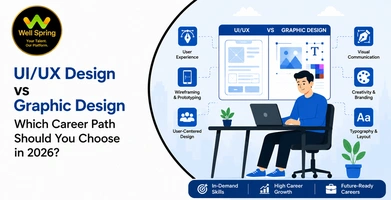
Choosing between UI/UX Design and Graphic Design is one of the biggest decisions for students who want to build a successful creative career. Although both fields require creativity and design thinking, they serve different purposes. UI/UX Design focuses on creating user-friendly digital experiences for websites, mobile applications, and software products, while Graphic Design focuses on visual communication, branding, advertising, and marketing materials.
This comprehensive guide explains the differences between UI/UX Design and Graphic Design, career opportunities, required skills, salaries, industry demand, latest 2026 trends, and practical tips to help students, fresh graduates, and working professionals choose the right career path.
UI/UX Design is ideal for individuals who enjoy technology, solving user problems, designing websites, mobile applications, and improving digital experiences. Graphic Design is best suited for creative individuals who enjoy branding, logo design, advertising, social media creatives, and visual storytelling.
Both careers offer excellent opportunities in 2026. However, as businesses continue investing in digital transformation, UI/UX Design currently has higher demand across software companies, startups, SaaS businesses, fintech, healthcare, and e-commerce industries. Graphic Design continues to remain an essential career for branding, advertising, publishing, packaging, and digital marketing.
The creative industry has evolved dramatically over the past decade. Today, businesses no longer compete only through products or services—they compete through customer experience, branding, and digital engagement.
Whether someone visits a website, shops through a mobile application, or interacts with a brand on social media, professional designers play an important role in creating meaningful and memorable experiences.
This growing demand has created two of the most popular creative career paths:
Although these professions share similar creative foundations, they solve completely different business challenges.
According to the U.S. Bureau of Labor Statistics, employment for Web Developers and Digital Interface Designers is projected to grow 8% between 2023 and 2033, faster than the average for all occupations. This growth reflects the increasing need for professionals who can design intuitive digital experiences for websites, software applications, and mobile platforms.
Similarly, businesses continue investing heavily in branding, marketing campaigns, packaging, advertising, and social media, creating consistent opportunities for skilled Graphic Designers across various industries.
If you have ever wondered,
The answer depends on your interests, strengths, career goals, and the type of creative work you enjoy.
If you enjoy understanding user behaviour, solving digital problems, creating website layouts, designing mobile applications, and improving customer experiences, UI/UX Design could be your ideal career.
On the other hand, if you enjoy creating logos, advertisements, brochures, social media creatives, packaging, illustrations, and building strong brand identities, Graphic Design may be the perfect choice.
At Well Spring Talent Solutions, students receive practical, industry-oriented training through live projects, internships, portfolio development, expert mentorship, interview preparation, and placement assistance. This hands-on learning approach helps learners develop real-world skills that employers actively seek in today's competitive design industry.
The demand for skilled designers has never been higher. Businesses across every industry are investing in digital transformation, customer experience, and branding to stay competitive.
Industries actively hiring designers include:
Modern businesses understand that excellent design directly impacts customer satisfaction, brand trust, and business growth.
For example:
As businesses continue adopting AI, cloud technologies, SaaS platforms, and digital services, the demand for both UI/UX Designers and Graphic Designers will continue growing throughout 2026 and beyond.
One of the biggest misconceptions among beginners is believing that completing a design course alone guarantees a job.
In reality, most employers evaluate candidates based on:
A candidate with a strong portfolio showcasing real-world projects often has a significant advantage over someone who possesses only academic certificates.
This is why students should focus on building practical experience alongside learning industry-standard software tools.
UI stands for User Interface, while UX stands for User Experience.
Although these two disciplines work together, they have different responsibilities.
User Interface (UI) Design focuses on how digital products look, including layouts, buttons, typography, colours, icons, spacing, and overall visual appearance.
User Experience (UX) Design focuses on how users interact with those products by improving usability, accessibility, navigation, and customer satisfaction.
Simply put:
Together, UI and UX create digital experiences that help users complete tasks quickly, efficiently, and without frustration.
A professional UI UX Design Course in Trichy typically includes practical training in:
Students work on real-world projects that help them understand how users interact with websites and mobile applications while building professional portfolios.
UI/UX Designers are employed across various industries because almost every business today depends on digital products.
Common workplaces include:
The versatility of UI/UX Design makes it one of the most future-proof creative careers available today.
As businesses increasingly compete through digital experiences rather than just products, UI/UX Designers have become key contributors to business success.
A well-designed interface can help businesses:
Because UI/UX Designers combine creativity with psychology, research, technology, and business strategy, they are often among the highest-valued professionals within product development teams.
As digital transformation continues worldwide, demand for skilled UI/UX professionals is expected to remain strong for years to come.
Graphic Design is the art of communicating ideas, messages, and emotions through visual elements. It combines creativity, typography, colour, imagery, illustrations, layouts, and branding to create designs that attract attention and effectively communicate information.
Unlike UI/UX Design, which focuses on improving user interaction with digital products, Graphic Design primarily focuses on creating visually appealing content that strengthens a brand's identity and supports marketing and communication goals.
Graphic Designers help businesses build memorable brands by designing logos, advertisements, brochures, packaging, social media creatives, business cards, posters, banners, and various digital and print marketing materials.
Every successful business, from startups to multinational companies, relies on Graphic Designers to create a professional and consistent brand image that connects with customers.
A professional Graphic Design Course in Trichy equips students with the practical and creative skills needed to work across advertising agencies, branding companies, digital marketing firms, publishing houses, and freelance projects.
Students generally learn:
Through practical assignments and portfolio projects, students gain hands-on experience designing professional marketing materials used by real businesses.
Graphic Designers have opportunities across almost every industry because visual communication plays an essential role in marketing and branding.
Popular career opportunities include:
With the rapid growth of digital marketing and online branding, Graphic Designers continue to remain highly valuable across industries.
Despite the rapid advancement of Artificial Intelligence, businesses continue to require professional Graphic Designers to create unique brand identities and meaningful visual communication.
While AI tools can assist with repetitive tasks and generate design ideas, they cannot fully replace human creativity, emotional understanding, strategic thinking, or brand storytelling.
Successful brands differentiate themselves through original visual identities that reflect their values and connect emotionally with customers. Skilled Graphic Designers play a crucial role in achieving this by combining creativity with business objectives.
As companies continue investing in digital marketing, social media, advertising, and brand development, the demand for talented Graphic Designers remains strong across both digital and traditional industries.
Although both professions involve creativity, design thinking, and visual problem-solving, they serve different purposes and solve different business challenges.
UI/UX Design focuses on improving how users interact with digital products. Designers research user behaviour, analyse customer needs, create wireframes, develop prototypes, conduct usability testing, and build intuitive interfaces that enhance the overall user experience.
Graphic Design, on the other hand, focuses on visual communication. Graphic Designers create compelling visuals that help businesses communicate messages, strengthen brand identity, attract customers, and support marketing campaigns.
Example
Imagine an online shopping application.
A UI/UX Designer is responsible for:
A Graphic Designer is responsible for:
Both professionals contribute to the success of the same business, but their responsibilities are entirely different.
There is no single answer to whether UI/UX Design or Graphic Design is better. The right career depends on your interests, personality, and long-term goals.
Many successful professionals eventually combine both skill sets, making them more versatile and increasing their career opportunities.
One of the most common questions students ask is why UI/UX Designers often receive higher salaries than Graphic Designers.
The answer lies in the business impact of their work.
UI/UX Designers influence:
Their work directly affects how customers interact with websites, mobile applications, and software products. Even small improvements in usability can significantly increase customer engagement and business performance.
Graphic Designers also create substantial value by building brand recognition and marketing effectiveness. Experienced professionals specializing in branding, motion graphics, creative direction, or packaging design can earn highly competitive salaries as well.
Ultimately, salary depends on practical skills, portfolio quality, experience, specialization, industry, and continuous learning rather than job title alone.
Professional UI/UX Designers typically develop expertise in:
These skills help designers create digital products that are intuitive, user-friendly, and accessible.
Professional Graphic Designers focus on developing strong creative and branding skills, including:
These skills enable designers to create visually compelling brand assets that communicate messages effectively across digital and print media.
1. Choosing a Career Based Only on Salary
Many beginners assume the highest-paying career is automatically the best choice.
Better Approach: Choose a career that matches your interests, strengths, and long-term goals. Passion and continuous learning often lead to greater success than salary alone.
2. Assuming UI/UX Design and Graphic Design Are the Same
Although both fields involve creativity, they require different mindsets, responsibilities, and technical skills.
Better Approach: Understand the daily responsibilities of each profession before selecting your career path.
3. Learning Software Without Understanding Design Principles
Many students focus only on learning tools such as Photoshop, Illustrator, or Figma.
Professional designers understand that software is only a tool.
The real value comes from understanding:
Strong design principles help professionals create effective solutions regardless of which software they use.
4. Ignoring Portfolio Development
Most employers review portfolios before resumes.
A well-structured portfolio demonstrates:
Students who consistently work on real-world projects significantly improve their chances of securing internships and full-time employment.
5. Not Working on Real Projects
Tutorials are useful for learning software, but they cannot replace practical experience.
Students should regularly design:
Practical experience builds confidence and prepares learners for professional design careers.
The design industry is evolving faster than ever as businesses invest in digital transformation, customer experience, artificial intelligence, and brand innovation. Modern designers are expected to combine creativity with technology, problem-solving, collaboration, and business thinking.
Today's organizations are looking for professionals who can design exceptional user experiences while also creating visually compelling brand identities. As AI-powered tools become more accessible, designers who continuously update their skills will remain highly competitive.
According to Adobe's Creative Trends Report, more than 80% of creative professionals believe AI-powered design tools improve productivity by automating repetitive tasks. Rather than replacing designers, AI enables professionals to spend more time on strategic thinking, creativity, and innovation.
Similarly, the U.S. Bureau of Labor Statistics projects steady growth for Web Developers and Digital Interface Designers through 2033, highlighting the increasing demand for professionals who can create intuitive digital experiences.
The following trends are shaping the future of both UI/UX Design and Graphic Design:
Designers who understand these trends will be better prepared for future career opportunities.
Artificial Intelligence has become one of the most discussed topics in the design industry. Many students worry that AI will replace designers.
The reality is very different.
AI is helping designers by automating repetitive tasks such as:
However, AI cannot replace:
Successful designers use AI as a productivity tool rather than viewing it as competition.
The future belongs to professionals who combine creativity with AI-powered workflows.
Whether you choose UI/UX Design or Graphic Design, long-term success depends on continuous learning and practical experience.
Here are some expert recommendations:
Before learning software tools, understand:
Strong fundamentals remain valuable throughout your career.
Employers prefer candidates who can demonstrate practical work.
Include projects such as:
Quality matters more than quantity.
For UI/UX Designers
For Graphic Designers
Learning these tools significantly improves employability.
Instead of copying tutorials, create original solutions for:
Real projects demonstrate practical thinking.
Technology changes rapidly.
Successful designers continuously learn about:
Continuous learning creates long-term career growth.
Choosing the right institute is one of the most important decisions for building a successful design career.
Well Spring Talent Solutions focuses on practical, industry-oriented learning that prepares students for real-world opportunities.
Students receive:
Rather than focusing only on theory, students gain practical exposure that helps them become confident professionals.
|
UI/UX Design |
Graphic Design |
|
Focuses on user experience and usability |
Focuses on visual communication |
|
Designs websites and mobile apps |
Designs logos, banners and marketing materials |
|
Solves user problems |
Builds strong brand identity |
|
Uses research and usability testing |
Uses creativity and visual storytelling |
|
Works with developers and product teams |
Works with marketing and branding teams |
|
Uses Figma, Adobe XD and design systems |
Uses Photoshop, Illustrator and InDesign |
|
High demand in software companies |
High demand in branding and advertising |
|
Strong career opportunities in SaaS and technology |
Strong career opportunities in creative industries |
Here are five recommendations from experienced design professionals:
1. Choose Based on Interest
Do not choose a career solely because of salary.
Passion encourages continuous improvement.
2. Build Before You Apply
Complete practical projects before applying for internships or jobs.
Employers hire designers who can demonstrate real skills.
3. Learn Communication Skills
Designers work with:
Communication is just as important as creativity.
4. Learn AI Responsibly
AI should improve productivity—not replace creative thinking.
Designers who understand AI will have a competitive advantage.
5. Never Stop Learning
The best designers remain curious.
They continuously improve through:
Learning never ends in the design industry.
Which is better: UI/UX Design or Graphic Design?
Both careers offer excellent opportunities. UI/UX Design is ideal for individuals interested in technology, digital products, and user experience. Graphic Design is better suited for those passionate about branding, advertising, creativity, and visual storytelling.
Is UI/UX Design a good career in 2026?
Yes. UI/UX Design continues to be one of the fastest-growing creative careers because businesses increasingly invest in websites, mobile applications, SaaS platforms, and digital customer experiences.
Can Graphic Designers become UI/UX Designers?
Absolutely.
Many Graphic Designers transition successfully into UI/UX Design by learning:
Their strong visual design skills often provide a significant advantage.
Which career offers better salary?
Salary depends on:
UI/UX Designers generally earn higher salaries because they contribute directly to digital product success. However, experienced Graphic Designers specializing in branding, motion graphics, or creative direction also earn highly competitive salaries.
Which course should beginners choose?
Students interested in websites, mobile applications, and technology should consider a UI UX Design Course in Trichy.
Students passionate about branding, creativity, illustration, and advertising should consider a Graphic Design Course in Trichy.
Exploring both disciplines before choosing a specialization is often beneficial.
The demand for skilled designers continues to grow across Trichy, Thanjavur, Karur, Pudukkottai, Dindigul, Perambalur, Ariyalur, Namakkal, and other regions of Tamil Nadu. Businesses are increasingly investing in websites, mobile applications, branding, digital marketing, and customer experience, creating excellent opportunities for aspiring designers.
Instead of relocating to metropolitan cities, students can now access industry-oriented design education locally through Well Spring Talent Solutions. With live projects, internships, portfolio development, and placement support, learners gain practical skills that align with current industry expectations.
What is the difference between UI/UX Design and Graphic Design?
UI/UX Design focuses on creating user-friendly digital experiences for websites, mobile applications, and software, while Graphic Design focuses on visual communication through branding, logos, advertisements, social media creatives, packaging, and marketing materials.
Which career has better future scope?
Both careers offer excellent long-term opportunities. UI/UX Design has higher demand in software and technology sectors, while Graphic Design remains essential for branding, advertising, publishing, and digital marketing.
Who should learn UI/UX Design?
Students, graduates, software professionals, web designers, Graphic Designers, and anyone interested in digital product design and user experience can benefit from UI/UX training.
Who should learn Graphic Design?
Creative individuals passionate about branding, illustration, advertising, publishing, visual storytelling, and marketing communication should consider Graphic Design.
Is learning UI/UX Design or Graphic Design worth it in 2026?
Yes. Both professions continue to grow as organizations invest in digital transformation, customer experience, branding, and online marketing. Professionals who build strong portfolios and continuously upgrade their skills remain highly employable.
Choosing between UI/UX Design and Graphic Design is not about selecting the "better" career—it's about choosing the path that aligns with your passion and strengths. Both professions offer rewarding opportunities, creative satisfaction, and long-term growth.
If you enjoy technology, user behaviour, and digital experiences, UI/UX Design can lead to exciting opportunities in software, startups, SaaS, and product companies. If your passion lies in creativity, branding, advertising, and visual storytelling, Graphic Design offers a fulfilling career across marketing agencies, creative studios, publishing, and digital media.
At Well Spring Talent Solutions, students gain practical experience through live projects, portfolio development, internships, expert mentorship, interview preparation, and placement assistance. This industry-focused approach helps aspiring designers build the confidence and skills needed to succeed in today's competitive creative landscape.
Start your creative journey today and take the first step toward building a successful design career.
15 Oct 2026
15 Oct 2026
14 Oct 2026

14 Oct 2026
13 Oct 2026
Both UI/UX Design and Graphic Design offer excellent career opportunities, but UI/UX Design currently has higher demand due to the rapid growth of digital products, mobile applications, SaaS platforms, and e-commerce businesses. Graphic Design remains a strong career choice for branding, advertising, publishing, social media marketing, and creative agencies. The right choice depends on your interests, skills, and career goals.
Yes. Learning both UI/UX Design and Graphic Design is a great way to expand your career opportunities. Graphic Design helps you build strong visual design skills, while UI/UX Design teaches user research, wireframing, prototyping, and interaction design. Professionals with expertise in both fields are highly valued by employers because they can contribute to branding as well as digital product design.
Beginners interested in UI/UX Design should start with tools like Figma, Adobe XD, and FigJam for designing websites and mobile applications. Those pursuing Graphic Design should learn Adobe Photoshop, Adobe Illustrator, and Adobe InDesign for creating logos, branding materials, advertisements, and marketing creatives. Understanding design principles is just as important as mastering these tools.
Yes. Most employers evaluate designers based on the quality of their portfolio rather than certificates alone. A strong portfolio showcasing real-world projects, creative thinking, problem-solving skills, and practical experience significantly improves your chances of securing internships and full-time design roles. Certificates add value, but practical work demonstrates your actual capabilities.
Start by learning the fundamentals of design, mastering industry-standard software, and working on real-world projects. Build a professional portfolio, stay updated with the latest design trends and AI-powered tools, seek feedback from mentors, and continuously improve your skills. Joining an industry-oriented training institute that offers live projects, internships, and placement assistance can help you become job-ready and confidently launch your design career.
Get internship updates, IT training news, placement opportunities, and career tips directly to your inbox.
Join our WhatsApp community for internship updates, IT courses, placement support, and latest job opportunities.
Join Now