Blog Details
Home Blog Details
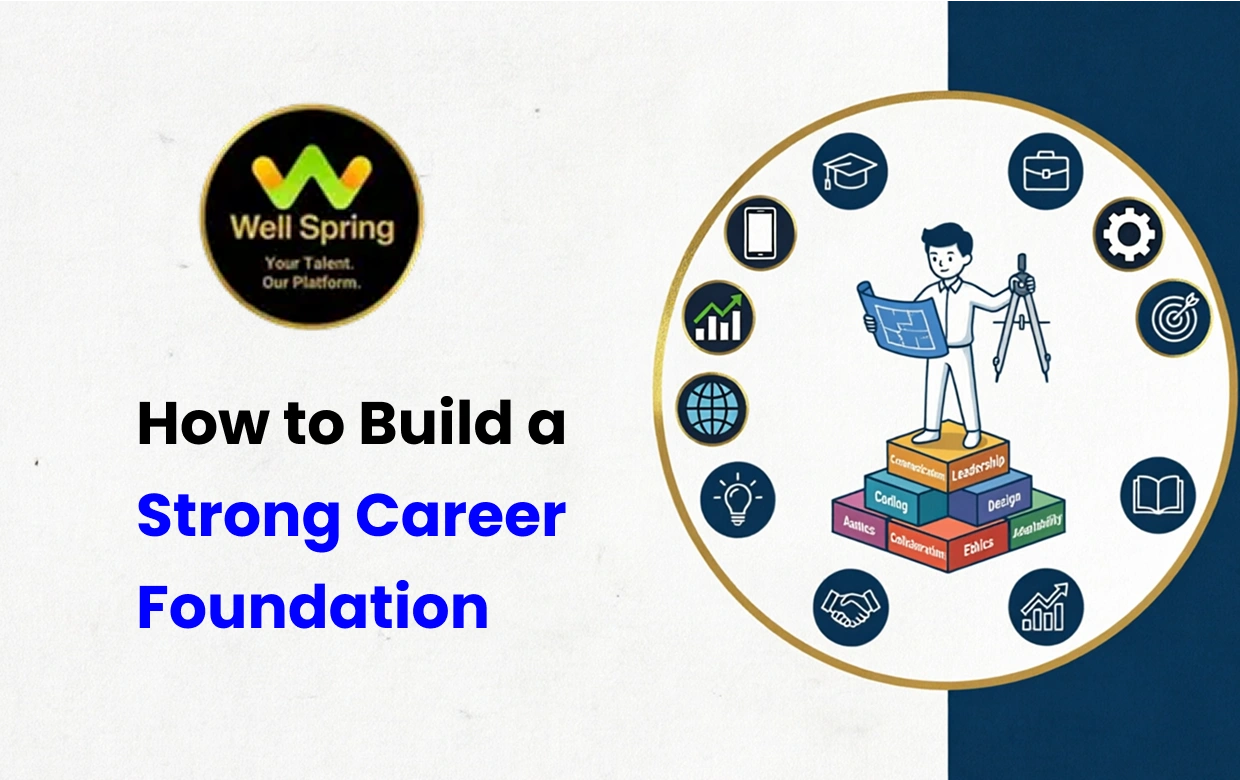
Choosing a career is not something that needs to be figured out in one day. For many college students, the difficult part is not finding a job—it is understanding which direction to take, what skills to develop, and how to prepare before graduation.
A degree can give you an academic foundation, but a strong career foundation usually comes from a combination of knowledge, practical skills, communication, experience, and the ability to keep learning.
You do not need to know exactly where you will be five or ten years from now. What matters is taking sensible steps today that make your next step easier.
This guide explains how students can build a career foundation from college onwards, including choosing a career direction, developing technical and soft skills, completing projects, gaining experience, building a portfolio, preparing a resume, using LinkedIn, attending interviews, and creating a practical six-month career plan.
A strong career foundation is the combination of skills, experience, knowledge, and professional habits that prepare you for future opportunities.
It does not mean having a perfect resume or collecting dozens of certificates.
A student with a strong foundation may have:
Think of it this way:
Degree → Skill → Practice → Project → Portfolio → Experience → Opportunity
The process takes time. You do not need to complete everything at once.
Many students wait until their final semester before thinking seriously about employment. By then, they may realise that they need practical skills, a resume, projects, internship experience, interview preparation, better communication, and knowledge of their chosen industry.
Starting earlier gives you more time to experiment.
If you are in your first or second year, you have an opportunity to explore different fields before making a long-term decision. If you are already in your final year, you can still start—it is simply important to focus on the most useful activities first.
College is not only a time to complete a degree. It can also be a good time to discover what type of work you enjoy and what you are capable of learning.
Before choosing a course or career, spend some time understanding yourself. Ask yourself:
You don't need to have one perfect answer. Instead, make a list of three areas that interest you and explore each one through small projects, free learning resources, or introductory courses.
Experience can help you understand your interests better than assumptions.
Choosing a career does not mean selecting one job title and staying with it forever. Start by identifying a broader field.
Technology: Web development, software development, data analytics, cybersecurity, cloud technologies.
Marketing: SEO, digital marketing, social media marketing, Google Ads, content marketing.
Creative Fields: Graphic design, video editing, UI/UX, content creation.
Business and Analytics: Business analytics, data analysis, sales, operations, business development.
Once you identify a field, spend some time understanding the skills commonly required for entry-level roles in that area.
A skill being popular does not automatically mean it is the right choice for you. For example, you may hear that a particular technology or marketing skill is in demand. That can be useful information, but also consider:
A good career decision usually considers both opportunity and personal suitability.
Your degree and professional skills do not have to be separate. You can study for your degree while developing one additional skill that supports your career direction.
For example:
These are only examples. The right combination depends on your interests and career goals.
The important idea is to avoid trying to learn ten different skills at the same time. Start with one. Learn the basics. Practise. Complete a project. Then decide what you should learn next.
A strong career foundation needs both.
These are skills directly related to your chosen field. Examples include SEO, web development, data analysis, Google Ads, social media marketing, graphic design, video editing, programming, and analytics.
These influence how effectively you work with others. Examples include communication, time management, teamwork, problem-solving, adaptability, professional behaviour, listening, and presentation skills.
Having technical knowledge but being unable to explain your work can make professional situations difficult. Similarly, good communication without useful job-related skills may not be enough for many technical or specialist roles. You need a balance.
There is no single list that is suitable for every student. Choose skills according to your intended career.
For students interested in digital careers, some areas worth exploring include:
| Skill Area | What Beginners Can Learn |
|---|---|
| SEO | Keyword research, on-page SEO, technical basics and Search Console |
| Digital Marketing | SEO, advertising, content, analytics and campaigns |
| Social Media Marketing | Content strategy, social platforms, advertising and analytics |
| Google Ads | Keywords, campaigns, ad copy, budgets and conversions |
| Web Development | HTML, CSS, JavaScript and backend fundamentals |
| Data Analytics | Excel, SQL, dashboards and data interpretation |
| AI Tools | Research, productivity, learning and workflow assistance |
The goal is not to learn everything in this table. Choose one area, learn it properly, and build evidence of your ability.
SEO and digital marketing can be useful areas for students interested in online businesses and marketing.
An SEO beginner can start by learning keyword research, search intent, on-page SEO, internal linking, technical SEO basics, content optimisation, Search Console, and website analysis.
A digital marketing learner can expand into SEO, paid advertising, social media, content marketing, analytics, and email marketing.
The advantage of learning a practical marketing skill is that you can practise many concepts using your own small projects.
Social media marketing is another area students can explore. A beginner can learn Instagram marketing, Facebook marketing, YouTube marketing, LinkedIn marketing, content planning, copywriting, organic social media, paid social advertising, audience research, and analytics.
For example, you could create a sample social media strategy for a local restaurant, training institute, or small business. That project can become part of your portfolio.
Students interested in technology may explore web development. A beginner roadmap could include:
HTML → CSS → JavaScript → Frontend Framework → Backend → Database → Projects
Don't worry about learning every programming language at the beginning. Focus on understanding the fundamentals and building small applications. A simple project can teach you more about development than watching hours of tutorials without writing code.
If you enjoy working with numbers and information, data analytics may be worth exploring. A beginner can start with Excel, data cleaning, basic statistics, SQL, data visualisation, dashboards, and data interpretation.
Again, projects are important. Instead of only learning how SQL works, take a dataset and try to answer actual questions using SQL.
AI tools are becoming part of many professional workflows. Students can learn how to use AI for research, brainstorming, learning difficult concepts, creating study plans, summarising information, interview practice, improving professional writing, generating project ideas, and automating repetitive tasks.
But AI should be treated as a tool, not a replacement for learning. If you use AI to write everything for you without understanding it, you may struggle when an interviewer asks you to explain your work.
AI can help you prepare for a career, but use it carefully.
You can ask AI to:
Don't:
Your resume and portfolio should represent what you can genuinely do.
Many students complete courses but still feel unsure when they face a real project. The reason is often simple: Learning something and doing something are different experiences.
You may understand what SEO is, but can you audit a website?
You may understand social media marketing, but can you create a 30-day content strategy?
You may learn programming concepts, but can you build a working application?
You may study data analytics, but can you analyse a dataset and explain what the numbers mean?
Practical work turns knowledge into usable skills.
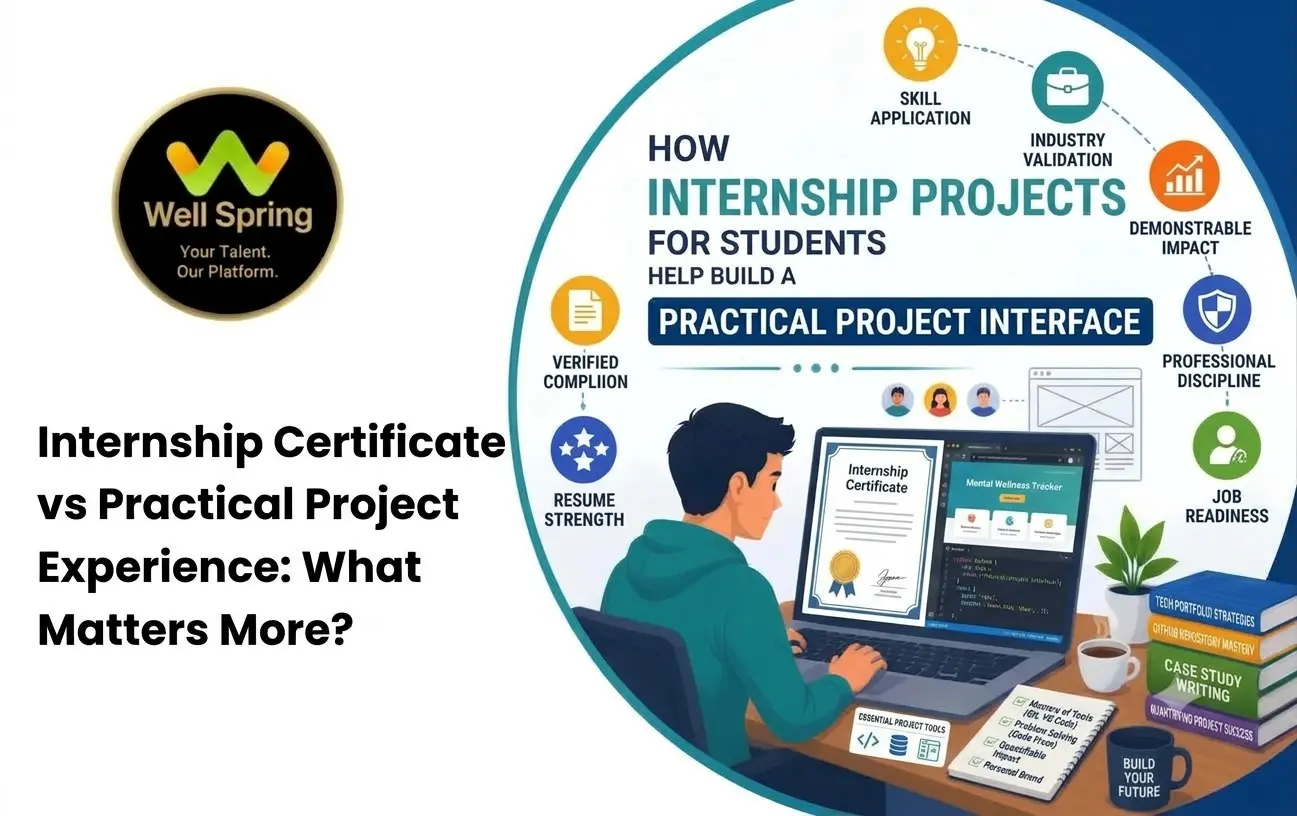
Certificates can be useful, but they should not become the main goal.
Suppose two students apply for the same entry-level position:
The second student may have more useful evidence to discuss during an interview.
A certificate tells someone: “I completed this learning programme.”
A project can help demonstrate: “Here is what I can actually do.”
The strongest approach is to combine both where appropriate.
Your project should match the skill you want to develop.
SEO Student: Website SEO audit, keyword research report, content optimisation project, technical SEO checklist.
Social Media Marketing Student: 30-day content calendar, Instagram strategy, competitor analysis, social media campaign plan.
Web Development Student: Portfolio website, blog application, e-commerce prototype, small business website.
Data Analytics Student: Sales dashboard, customer analysis, data visualisation project, SQL analysis.
The project doesn't need to be huge. A small finished project is often more useful than a large project that never gets completed.
An internship can help you understand how professional work differs from classroom learning. You may experience deadlines, client requirements, team communication, project management, feedback, workplace tools, documentation, and professional communication.
Not every internship will provide the same level of experience, so look carefully at the responsibilities before accepting one. If possible, choose an internship where you will actually work on tasks related to your career direction.
A portfolio is a collection of work that demonstrates your skills. It can contain projects, case studies, reports, designs, websites, campaign plans, analytics dashboards, and writing samples.
For each project, explain:
The Problem: What were you trying to solve?
Your Approach: What did you do?
Tools Used: Which tools or technologies did you use?
Result: What happened?
What You Learned: What would you improve next time?
This makes a portfolio much more useful than simply uploading screenshots.
Depending on your field, you can use:
You don't need to use every platform. Choose one or two that suit your field and keep them updated.
Communication is one of the most useful skills in almost every career. You may need to explain your work, ask questions, write emails, talk to clients, present ideas, participate in meetings, and discuss problems with colleagues.
Good communication does not mean using complicated English. It means being clear, respectful, and understandable.
If English is not your strongest language, don't be discouraged. You can improve gradually.
You don't need to sound like a native speaker. The goal is to communicate your ideas clearly and confidently.
A resume should quickly communicate:
Who you are → What you know → What you have done → What you can contribute
For a fresher, a simple structure can include:
Don't fill your resume with every course you have ever completed. Prioritise information that is relevant to the position you are applying for.
Avoid writing only: “Created a website.”
Instead, explain what you actually did. For example:
“Developed a responsive business website using HTML, CSS and JavaScript, including service pages, contact forms and mobile-friendly layouts.”
The second version gives the recruiter a clearer idea of your work. Always make sure the description accurately represents your actual contribution.
LinkedIn can help students establish a professional online presence. Your profile should contain:
You can also share project updates, learning experiences, industry observations, useful resources, and professional achievements.
Don't treat LinkedIn only as a place to ask people for jobs. Use it to gradually build a professional identity.
Networking does not mean collecting hundreds of random contacts. Good networking is about building genuine professional relationships.
You can connect with trainers, professors, alumni, industry professionals, internship mentors, recruiters, and people working in your target field.
When contacting someone, be respectful and specific. For example, instead of simply writing “Please give me a job,” you could say:
“I am a final-year student learning SEO and currently building practical projects. I came across your work in digital marketing and would like to learn more about the skills you recommend for someone starting in this field.”
That creates a much better professional conversation.
Interview preparation should begin before you start receiving interview calls. Prepare answers for common questions such as:
Tell me about yourself.
Why did you choose this field?
What skills have you learned?
Tell me about one of your projects.
What was difficult about the project?
How did you solve the problem?
What are your strengths?
What are you currently learning?
Why do you want this role?
Most importantly, know your own resume. If you mention a project, be prepared to explain why you built it, what tools you used, what problems you faced, what you learned, and what you would improve.
Your first job may introduce you to responsibilities that college did not cover. Start developing habits such as:
Meeting Deadlines: If you commit to a task, understand when it needs to be completed.
Taking Notes: Write down important instructions rather than relying entirely on memory.
Asking Questions: If you don't understand something, ask for clarification.
Accepting Feedback: Feedback is part of professional development.
Managing Files: Learn to organise documents, project files, and versions properly.
Communicating Delays: If a task is going to take longer than expected, communicate early instead of waiting until the deadline.
These simple habits can make a significant difference at work.
Waiting Until Final Year: Starting earlier gives you more time to experiment and improve.
Collecting Too Many Certificates: A certificate without practical knowledge has limited value.
Learning Too Many Skills at Once: Focus on one primary skill before adding another.
Copying Projects: A project you cannot explain will not help much during an interview.
Ignoring Communication: Technical knowledge alone may not be enough.
Having an Outdated Resume: Update your resume whenever you complete a meaningful project or gain relevant experience.
Not Building a Portfolio: Don't wait until you have a job before documenting your work.
Applying Everywhere Without Direction: Target roles that match your skills and career interests.
Comparing Your Progress With Others: Someone else may have started learning earlier. Focus on your own progress.
If you decide to take a course, don't choose only because the title sounds attractive. Before enrolling, check:
Curriculum: Does it actually teach the skills you want?
Practical Training: Will you work on real or realistic projects?
Trainer Experience: Does the trainer have relevant practical knowledge?
Tools: Will you use industry-relevant tools?
Projects: Will you have work to add to your portfolio?
Mentoring: Can you ask questions and receive feedback?
Career Support: If placement or career support is advertised, understand exactly what it includes.
Course Duration: Does the pace give you enough time to practise?
The right course should help you move from understanding concepts to applying them.
There are thousands of courses and tutorials available online. The challenge is not finding information. The challenge is knowing what to learn and when to stop watching and start practising.
Try this approach:
Learn: Study one concept.
Practise: Apply it immediately.
Build: Use it in a small project.
Review: Find what went wrong.
Improve: Try again.
This is more effective than watching dozens of tutorials without completing anything.
You can use this framework throughout college:
Explore: Find areas that interest you.
Choose: Select one skill or career direction.
Learn: Understand the fundamentals.
Practise: Work on small exercises.
Build: Complete practical projects.
Document: Create a portfolio.
Experience: Look for internships or real-world opportunities.
Present: Improve your resume, LinkedIn profile, and interview skills.
Apply: Start applying for relevant opportunities.
Improve: Use feedback to continue developing.
You don't need to change your entire career in six months. Use six months to create a strong starting point.
Month 1: Explore and Choose. Identify your interests, research career options, choose one primary skill, and understand entry-level job requirements. Goal: Know what you want to learn and why.
Month 2: Learn the Fundamentals. Follow a structured course, learn basic concepts, take notes, and practise simple exercises. Goal: Understand the fundamentals.
Month 3: Start Practical Projects. Build two or three small projects. Don't worry about making them perfect. Goal: Turn knowledge into practical ability.
Month 4: Build Your Portfolio. Document your projects and improve your resume, LinkedIn profile, portfolio, and professional introduction. Goal: Create evidence of your skills.
Month 5: Gain Experience. Look for internships, college projects, freelance opportunities, volunteer projects, or practical collaborations. Goal: Gain exposure to real work.
Month 6: Prepare for Opportunities. Practise interviews, technical questions, project explanations, communication, and job applications. Start applying for relevant entry-level positions. Goal: Move from preparation to opportunity.
Before graduating, ask yourself:
If you can answer “yes” to most of these, you are already building a stronger foundation.
Building a strong career foundation is not about having everything figured out before graduation. It is about making steady progress.
Start by understanding your interests. Choose a direction that makes sense for you. Develop one useful skill. Practise it through projects. Build a portfolio. Look for experience. Improve your communication. Prepare your resume and professional profile. Then start applying for opportunities and learn from the feedback you receive.
The most useful progression is:
Explore → Choose → Learn → Practise → Build → Document → Gain Experience → Apply → Improve
You do not need ten certificates, a perfect resume, or years of experience to begin. You need a starting point and the willingness to keep improving.
For students, the strongest career foundation is usually built through a combination of education, practical skills, projects, experience, communication, and continuous learning. Start small, choose one direction, and make your next step better than your previous one.
15 Oct 2026
15 Oct 2026
14 Oct 2026
14 Oct 2026
13 Oct 2026
A career foundation is the combination of education, practical skills, experience, communication abilities, and professional habits that prepare you for future career opportunities.
You can start at any stage of college. Starting earlier gives you more time to explore different fields, develop skills, and complete projects.
A degree is valuable, but many careers also require practical skills, communication, experience, and continuous learning.
Instead of trying to learn many unrelated skills, start with one skill that supports your chosen career direction. Build confidence before adding another.
Certificates can demonstrate that you completed a course, but practical skills and projects can provide stronger evidence of what you can actually do.
Internships can provide exposure to workplace processes, deadlines, teamwork, and real projects. Choose opportunities that offer meaningful learning where possible.
Create practical projects based on your chosen field. For example, build a website, create an SEO audit, prepare a social media campaign, or analyse a dataset.
Understanding how to use AI tools responsibly can be useful, but students should still develop the underlying skills and verify important information.
Practise speaking, writing, presentations, and professional conversations regularly. Focus on clarity rather than trying to use complicated vocabulary.
Yes. Students can use LinkedIn to create a professional profile, showcase projects, follow industry professionals, and discover relevant opportunities.
Understand your resume, practise common questions, and be ready to explain your projects, skills, challenges, and learning experiences.
Yes. Career paths can change as you gain experience and discover new interests. Developing transferable skills such as communication, problem-solving, and learning ability can make transitions easier.
Get internship updates, IT training news, placement opportunities, and career tips directly to your inbox.
Join our WhatsApp community for internship updates, IT courses, placement support, and latest job opportunities.
Join Now