Blog Details
Home Blog Details

By Vignesh S., Web Developer & DevOps Enthusiast at Wellspring Talent
Trichy-based tech wizard with 5+ years crushing frontend projects, AI prompts, and automation workflows. Follow my jobs, internships, and programs for real-world gigs.
DevOps supercharges software development by smashing silos between devs and ops. Teams deploy faster, smarter, and tougher. Moreover, it blends automation with culture for non-stop wins.
DevOps fuses development and operations into one slick machine. Engineers build, test, and ship code like lightning. Consequently, businesses slash release times from months to hours.
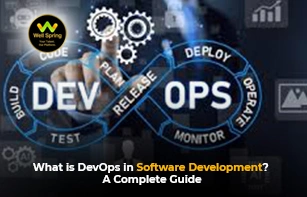
DevOps Lifecycle spins endlessly: plan, code, build, test, release, deploy, operate, monitor. Teams loop back fast with feedback loops. For instance, GitHub actions trigger reviews instantly.
This mindset crushes traditional walls. Version control (Git) reigns supreme for branching magic. Adopt it, and chaos vanishes.
Traditional Software Development Lifecycle (SDLC) crawls with handoffs and delays. DevOps flips it—continuous integration merges code daily, spotting bugs early.
Shift-left testing bakes QA into coding phase. Hence, defects die before they spread. Picture this: Jenkins pipelines auto-test every commit.
Waterfall? Dead. Agile teams thrive with DevOps speed. Agile methodology integration means sprints end with live features.
Citation: GeeksforGeeks DevOps Intro
CI/CD Pipeline glues everything. Developers push code; build automation compiles and tests it. Next, continuous deployment pushes to prod if green.
Tools like Jenkins, GitLab CI rock this. Continuous Integration runs unit tests nonstop. As a result, merges stay clean.
Pro tip: Add orchestration (Kubernetes/Docker) for container magic. Scale pods on demand. Boom—zero downtime.
External: Jenkins CI/CD Docs [web:ext1]
Infrastructure as Code (IaC) treats servers like software. Write Terraform scripts; spin clouds in seconds. No more SSH nightmares.
Teams version infra like code. Configuration management via Ansible ensures consistency. Thus, "it works on my machine" vanishes forever.
In 2026, IaC powers cloud-native development. AWS, Azure eat it up. Deploy multi-cloud without sweat.
Citation: N-iX DevOps Trends 2026
Microservices architecture splits monoliths into tiny, independent beasts. Each service owns its fate. Fault isolation keeps one crash from tanking all.
Orchestration (Kubernetes/Docker) herds these cats. K8s auto-scales traffic spikes. Meanwhile, service meshes like Istio handle comms.
For scale, go model services—AI models in 50GB containers. 2026 demands GPU-savvy deploys.
Citation: DEV Community Microservices Future
Site Reliability Engineering (SRE) applies software smarts to ops. Google birthed it; now everyone copies. SREs toil 50% code, 50% on-call.
SLIs, SLOs, SLAs rule. Monitoring and logging via Prometheus/Grafana spots fires early. Alerts? AI triages them.
SRE amps automation in DevOps. Auto-remediate outages. Reliability hits 99.99%.
DevOps Lifecycle starts with planning in Jira. Code in VS Code, commit to version control (Git). Build phase? Maven/Gradle.
Test with Selenium; deploy via Helm. Operate with feedback loops from users. Monitor via ELK stack.
Loop closes with retros. Continuous Deployment ensures hotfixes fly. Iterate relentlessly.
Citation: GeeksforGeeks Lifecycle
Automation in DevOps rules 2026. AI predicts failures in pipelines. ML tunes CI/CD Pipeline for speed.
Chatbots handle incidents; auto-healing fixes 80% issues. Build automation scripts everything.
Green DevOps cuts cloud bills 30%. Tools like ArgoCD gitops-ify deploys.
Monitoring and logging feed feedback loops. Datadog traces microservices. Loki aggregates logs at petabyte scale.
Alert on anomalies, not thresholds. Shift-left testing extends here—test logs pre-prod.
In prod, SRE dashboards rule. Spot bottlenecks; scale instantly.
Cloud-native development thrives on K8s. Microservices architecture + serverless = unstoppable.
Hybrid setups mix monoliths, models. Orchestration (Kubernetes/Docker) handles AI workloads like ChatGPT-scale.
Edge computing pushes deploys to IoT. Zero-latency wins.
DevSecOps embeds security in CI/CD Pipeline. Scan secrets pre-commit. OPA policies gatekeep.
AI copilots write secure code. 63% pros love it for vuln hunting.
Train devs; centralize policies. No more bolt-on security.
Citation: DevOps Training Trends
AI/ML automate automation in DevOps. DevSecOps deepens with real-time scans.
Model services shift scaling to GPUs. Edge + Green DevOps cut costs.
Site Reliability Engineering (SRE) baselines SLAs. Kubernetes owns hybrid worlds.
Grab Git, Docker, K8s. Build a CI/CD Pipeline on GitHub Actions. Practice IaC with Terraform.
Join Wellspring programs. Land internships hands-on.
Measure with SLOs. Automate ruthlessly. Scale to unicorn status.

03 Jun 2026
03 Jun 2026

03 Jun 2026

03 Jun 2026

03 Jun 2026
DevOps is a methodology that integrates development and operations to improve collaboration, automation, and faster software delivery.
Core components include continuous integration (CI), continuous delivery (CD), automation, monitoring, and collaboration.
It enables faster deployments, improved quality, better collaboration, and reduced time-to-market.
Yes, DevOps professionals are in high demand due to increasing adoption of cloud and automation.
Get internship updates, IT training news, placement opportunities, and career tips directly to your inbox.
Join our WhatsApp community for internship updates, IT courses, placement support, and latest job opportunities.
Join Now