Blog Details
Home Blog Details
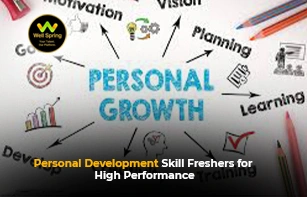
Personal development is the systematic process of upgrading your cognitive architecture and behavioral patterns to achieve Self-Actualization. It transcends simple self-improvement by utilizing Neuroplasticity and growth mindset applications to rewire how you process information and respond to stress. By integrating emotional intelligence with structured Habit Formation, you can move from passive learning to measurable skill acquisition.
Growth is not a metaphor; it is a physical restructuring of the brain. Neuroplasticity and growth mindset applications prove that the brain remains malleable well into adulthood, allowing for the development of new neural pathways through focused attention and repetition. When you engage in continuous learning, you are literally thickening the myelin sheaths around your neurons, increasing processing speed and accuracy.
To harness this, professionals should utilize growth mindset exercises for high-performance athletes, such as visualization and "Perceptual Positions." By mentally shifting between your own perspective, an observer's perspective, and a critic's perspective, you break cognitive rigidity. This practice facilitates Reframing, allowing you to view setbacks as data points rather than identity-defining failures.
Takeaway: Spend ten minutes daily practicing "State Management" by using Anchoring associating a physical touch with a peak state of focus to trigger high-performance neural triggers on demand.
As you scale the "Logical Levels" of an organization, your internal identity must evolve alongside your external title. Overcoming imposter syndrome for executive leadership requires moving beyond technical proficiency into the realm of Emotional Intelligence. High-level leaders often struggle because their "Representational Systems" (how they internally visualize success) are still calibrated to their previous, junior roles.
Using the "Meta-Model" of communication helps leaders challenge the deletions and distortions in their own thinking. If you find yourself thinking, "I don't belong here," ask: "Specifically, compared to whom, and by what metric?" This precision narrows the gap between perceived inadequacy and reality. Well Spring Talent Solutions often sees that the most successful candidates for high-impact career roles are those who have mastered this internal dialogue.
Takeaway: Utilize a "Circle of Excellence" technique before high-stakes meetings to project confidence and maintain executive presence under pressure.
For those in innovation-heavy fields, the "blank canvas" is often a source of paralysis. Habit stacking techniques for creative professionals solve this by anchoring new, difficult behaviors to existing, automatic ones. This is a core component of cognitive behavioral techniques for habit formation, ensuring that Habit Formation becomes a byproduct of environment rather than just willpower.
Consider the "Swish Pattern" to replace procrastination with creative flow. When you see the "trigger" image (e.g., an empty document), immediately "swish" it in your mind with a high-definition image of the completed project and the feeling of accomplishment. This utilizes "Submodalities" the building blocks of our mental images to change our emotional response to a task.
Takeaway: Identify your "Keystone Habit" and stack a high-value skill like skill acquisition in a new software immediately after your morning coffee to ensure consistent progress.
In a distributed workforce, "Rapport" is harder to build and easier to lose. Emotional intelligence strategies for remote team management require an acute understanding of the "Milton Model" of language using artfully vague, influential language to foster a sense of shared vision and psychological safety. This is vital for maintaining high morale without the benefit of physical proximity.
Effective remote leaders prioritize an "Ecology Check" before implementing major changes. This means analyzing how a new policy affects the entire "system" of a team member's life, not just their output. By focusing on emotional intelligence in leadership and professional growth, managers can reduce turnover and increase engagement. Many students exploring internship opportunities now prioritize organizations that demonstrate this level of empathetic leadership.
Takeaway: Practice "Modeling" by identifying a leader who manages remote teams exceptionally well and breaking down their specific linguistic and behavioral patterns for your own use.
At the peak of Self-actualization and Maslow's hierarchy of needs lies the integration of all personal and professional efforts. This isn't a destination but a state of being where your actions align perfectly with your values. Achieving this requires Strategic life planning and executive coaching frameworks that go beyond simple goal setting.
You must define "Well-Formed Outcomes." A goal like "I want to be a better leader" is too vague. A Well-Formed Outcome is stated in the positive, is within your control, and has a specific sensory-based evidence procedure (i.e., "How will I know I've reached it?"). This level of precision is exactly what we teach in our professional development programs at Well Spring Talent Solutions.
| Concept | Application | Result |
|---|---|---|
| Neuroplasticity | Targeted continuous learning | Permanent cognitive upgrades |
| Growth Mindset | Reframing failures as data | Increased resilience and risk-taking |
| Emotional Intelligence | Mastering Rapport and Meta-modeling | Superior team influence and retention |
| Habit Formation | Cognitive behavioral "Swish" patterns | Automated high-performance behaviors |
Takeaway: Conduct an annual "Ecology Check" on your life goals to ensure your professional trajectory isn't inadvertently sabotaging your personal well-being or long-term Self-Actualization.
The rapid pace of technological change necessitates cognitive behavioral tools for stress management in tech. When the "Meta-Model" of your work environment changes every six months, your internal "Representational Systems" must be flexible. Stress in tech often comes from "looping"—replaying a failure or a bug repeatedly in one's mind.
To break this, use the "Swish Pattern" to change the "Submodalities" of the stressor. Make the mental image of the problem small, black and white, and distant, while making the image of the solution bright, large, and close. This simple shift in internal representation can drastically lower cortisol levels and allow for more effective problem-solving. According to research on growth mindset by Carol Dweck, those who view their intelligence as a muscle to be developed rather than a fixed trait handle these high-stress environments with significantly less burnout.
Takeaway: Implement a "Shut Down Ritual" at the end of every workday to mentally decouple your identity from your output, preventing long-term fatigue.
Personal development is not a hobby; it is the most critical investment an executive or creative professional can make. By understanding the intersection of Neuroplasticity, Emotional Intelligence, and Habit Formation, you move from accidental growth to intentional mastery.
At Well Spring Talent Solutions, we specialize in bridging the gap between current capability and future potential. Whether you are seeking a new challenge or looking to sharpen your leadership edge, the journey toward Self-Actualization starts with a single, strategic choice. Start your evolution today by aligning your career path with your highest potential.
03 Jun 2026
03 Jun 2026
03 Jun 2026

03 Jun 2026
03 Jun 2026
Key skills include communication, time management, adaptability, problem-solving, and teamwork.
By setting clear goals, learning continuously, managing time effectively, and seeking feedback.
Soft skills improve collaboration, productivity, and the ability to handle workplace challenges.
It depends on consistency, but noticeable improvement can happen within a few weeks of practice.
Yes, they enhance confidence, leadership ability, and overall job performance.
Get internship updates, IT training news, placement opportunities, and career tips directly to your inbox.
Join our WhatsApp community for internship updates, IT courses, placement support, and latest job opportunities.
Join Now