Blog Details
Home Blog Details
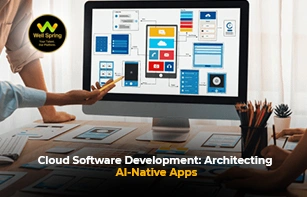
Cloud Software Development is the process of designing, building, and deploying applications specifically for cloud environments to maximize scalability, resilience, and cost-efficiency. Unlike traditional development, it prioritizes decentralized services and automated infrastructure.
To succeed in the modern market, engineering teams must adopt:
Modern Cloud-native architecture is more than just "hosting in the cloud"; it is a fundamental shift in how software is structured. It relies on containerization (using tools like Kubernetes) and dynamic orchestration to manage distributed systems.
By building applications as collections of small, independent services, organizations avoid the "monolithic bottleneck" where one small bug can crash an entire system. This approach follows the 12-Factor App methodology, a gold standard for building portable, resilient SaaS products.
Microservices development involves breaking an application into discrete services that communicate via APIs. This is ideal for complex, long-running processes where you need granular control over the environment and resource allocation.
In contrast, Serverless computing (like AWS Lambda or Azure Functions) allows developers to run code without managing any underlying servers. This is perfect for event-driven tasks, such as processing an image upload or triggering a notification.
When implementing serverless architecture patterns for enterprise applications, teams often use a hybrid approach. They might use microservices for the core business logic while offloading auxiliary tasks to serverless functions to optimize costs and minimize management overhead.
Successful cloud projects depend on tight DevOps integration to bridge the gap between code and production. This involves using Infrastructure as Code (IaC) tools like Terraform or Pulumi to define your cloud environment in a version-controlled script.
According to the Google DORA State of DevOps report, high-performing teams use automated testing and continuous deployment to achieve 208 times more frequent code deployments. This speed allows for faster feedback loops and more agile responses to market changes.
Building this culture requires specialized expertise. Many organizations look to Well Spring Talent Solutions programs to train or acquire specialists who understand the intersection of development and cloud operations.
Building for multiple users requires a specific focus on SaaS application development principles. The primary challenge here is multi-tenancy—ensuring that data from "Customer A" is strictly isolated from "Customer B" while they share the same underlying infrastructure.
To manage high-growth products, architects must implement multi-cloud deployment strategies for SaaS products. Relying on a single provider like AWS or Microsoft Azure creates "vendor lock-in" risks; a multi-cloud approach ensures that your service remains available even if a major provider suffers a regional outage.
One of the biggest pitfalls for growing companies is the "cloud bill shock." Optimizing cloud infrastructure costs for software startups requires active management of resources, such as using "Spot Instances" for non-critical tasks and setting up automated shut-offs for development environments after hours.
Security cannot be an afterthought in a distributed environment. When addressing security considerations for cloud-based microservices development, you must adopt a "Zero Trust" model. This means every service-to-service communication must be authenticated and encrypted, regardless of whether it is inside your private network.
For companies struggling to fill these high-stakes roles, Well Spring Talent Solutions offers a pipeline of vetted professionals who specialize in cloud security and FinOps (Financial Operations).
Following cloud-native software development best practices for scalability ensures that your application grows gracefully under load. Key strategies include:
Finding the right engineers to execute these complex patterns is often the biggest hurdle. Exploring open job listings can help you identify the specific skill sets—like Kubernetes orchestration and API design—currently in highest demand.
The rapid evolution of cloud providers means that the skills needed today will change within 18 months. Leading firms are investing in internship programs to cultivate "Cloud-First" thinkers early in their careers.
By focusing on foundational principles like the CNCF cloud-native definition rather than just specific tool syntax, organizations can build a resilient workforce capable of navigating the changing technological landscape.
Cloud Software Development is no longer a luxury for tech giants; it is the baseline for any business seeking to remain competitive. By focusing on Cloud-native architecture, mastering DevOps integration, and vigilantly optimizing cloud infrastructure costs for software startups, you can build a system that is as resilient as it is innovative.
If you are looking to scale your engineering team with experts who truly understand these paradigms, partner with Well Spring Talent Solutions. Whether you are building your first SaaS application development project or refining complex serverless architecture patterns for enterprise applications, having the right talent is the difference between a successful launch and a costly failure.

03 Jun 2026
03 Jun 2026
03 Jun 2026

03 Jun 2026

03 Jun 2026
AI-native apps are built with AI capabilities at their core, using cloud infrastructure for scalability and performance.
Platforms like Amazon Web Services, Microsoft Azure, and Google Cloud are widely used.
Cloud enables on-demand resources, distributed computing, and real-time data processing.
MLOps ensures continuous integration, deployment, and monitoring of machine learning models.
Yes, with proper security practices like encryption, access control, and monitoring.
Get internship updates, IT training news, placement opportunities, and career tips directly to your inbox.
Join our WhatsApp community for internship updates, IT courses, placement support, and latest job opportunities.
Join Now