Blog Details
Home Blog Details

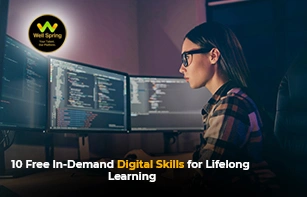
Direct Answer: Digital skills refer to the ability to effectively use, analyze, and build within digital environments.
For modern professionals, these range from basic software navigation to advanced capabilities like artificial intelligence, data analytics, and cybersecurity required to solve complex problems and drive business growth.
· Mastering specific in-demand digital skills directly correlates with higher earning potential and job security.
· By 2026 is projected to see a significant increase in the importance of digital skills across many jobs., abilities related to artificial intelligence, machine learning, and big data will dominate the job market.
· Upskilling does not require a traditional degree; you can leverage the use of technology to enhance your skill set. free digital resources and professional certificates to pivot your career.
· Technical proficiency must be paired with communication and problem-solving to truly stand out to an employer.
Employers no longer view technological proficiency as an optional bonus on a CV.
Modern businesses operate entirely through integrated digital systems, meaning every employee must be equipped to handle complex digital tools.
If you want to remain competitive, you must move beyond simply knowing how to use a computer.
The gap between those who actively develop digital competencies and those who rely on outdated knowledge is widening.
Companies are actively undergoing massive digital transformation initiatives that emphasize the importance of digital skills in the workplace.
They need workers who can navigate these changes, analyze incoming data, and involve the ability to adapt across industries. data, and optimize existing workflows.
This guide breaks down the exact competencies you need to thrive.
We will explore what tools matter, how to acquire them efficiently, and how to position yourself as an invaluable asset in the modern workplace.
Historically, digital literacy meant knowing how to send an email, organize files, or use basic application software.
Today, those actions are baseline expectations across every industry. True digital fluency requires strategic thinking and an understanding of how interconnected platforms operate.
When we talk about modern capabilities, we mean using technology to augment human output.
A modern marketer doesn't just write copy; they use search engine optimization and data analytics to ensure that copy reaches the exact right target audience by utilizing various types of digital skills.
A project manager doesn't just assign tasks; they use project management software to automate workflows and track team efficiency.
The goal is not to become a machine.
The objective is to understand digital technology well enough to let the machines handle repetitive tasks while you focus on high-level strategy and problem-solving.
This shift from manual execution to strategic oversight is what makes a candidate truly employable.
Every sector is feeling the pressure to modernize its operations.
According to the World Economic Forum’s Future of Jobs Report 2023 highlights the growing importance of digital skills in shaping the future job market by 2025., analytical thinking and technological literacy are the top priorities for global businesses.
Here are the 10 digital skills driving the market forward.
Artificial intelligence has fundamentally altered how we approach productivity. You do not need to be a software developer to leverage AI in your daily tasks.
The real value lies in prompt engineering knowing how to instruct language models to generate accurate, usable outputs that involve the ability to adapt.
Professionals who can integrate generative AI into their workflows complete tasks faster than their peers. Whether it is drafting marketing communications, summarizing heavy digital information, or troubleshooting technical issues, AI is the ultimate assistant. Knowing how to guide these tools safely and effectively is paramount.
Companies generate massive amounts of data, but raw numbers are useless without context.
Data analytics is one of the many jobs that require a strong foundation in the importance of digital skills.
Data analysis involves cleaning, interpreting, and applying this information to make strategic business decisions using digital devices.
It is the bridge between raw metrics and actionable business strategies.
You must also master data and information visualization.
Tools like Tableau or PowerBI allow you to transform complex spreadsheets into clear, visual stories that stakeholders can easily digest.
If you can effectively analyze and present big data, you become indispensable to corporate leadership.
As businesses move their operations online, the threat of malicious attacks increases exponentially.
You do not need to be a dedicated security analyst to practice good digital hygiene. Every employee must understand how to protect sensitive company information.
Phishing, social engineering, and weak password management are massive liabilities.
The IBM Cost of a Data Breach Report Consistently shows that human error is a leading cause of compromised systems, highlighting the importance of problem solving in information technology.
Employers actively seek staff who understand the fundamentals of in-demand skills. computer security and compliance.
Whether a company sells products and services online or builds internal corporate tools, user experience determines its success.
UX design focuses on making digital environments intuitive, efficient, and enjoyable for the end user. It requires a deep understanding of human psychology and behavioral data.
Poor design costs companies millions in lost revenue and wasted employee hours.
In fact, research on usability metrics by the Nielsen Norman Group proves that investing in user experience yields a massive return on investment.
Professionals who prioritize intuitive design are highly valued in digital product development.
The modern organization rarely stores its infrastructure on local hard drives.
Cloud computing allows remote teams to collaborate in real-time, access shared resources, and scale operations rapidly.
Familiarity with environments like AWS, Google Cloud, or Microsoft Azure is increasingly vital.
Understanding cloud architecture helps you manage files securely and integrate new software.
It also reduces friction when onboarding new employees, as all necessary assets are centralized.
If you want to work in a remote or hybrid setting, cloud proficiency is non-negotiable.
Visibility is the currency of the digital economy.
Search engine Optimization ensures that a brand's content appears when consumers look for solutions online using digital marketing strategies.
This goes beyond simple keyword stuffing; it involves understanding technical website architecture and user intent.
Strong digital marketing skills encompass SEO, search engine marketing, and content strategy.
You must know how to analyze competitor traffic, track conversion rates, and adjust campaigns based on real-time metrics to feel more confident in your strategies.
These abilities directly impact a company's bottom line.
Building software or launching digital media campaigns requires highly structured coordination.
Agile methodologies allow teams to iterate quickly, test concepts, and pivot without derailing the entire timeline.
It is a vital framework for any tech-adjacent role in information technology.
Mastering agile tools like Jira, Asana, or Trello proves you can organise complex projects efficiently.
It demonstrates your ability to communicate across different departments, from graphic design to IT. This procedural knowledge keeps projects under budget and on schedule.
You do not necessarily need to master complex computer programming languages to be successful.
However, a foundational understanding of HTML, CSS, and basic JavaScript provides a massive advantage.
It allows you to make quick website updates without waiting on an engineering team.
Understanding how the web is built also helps you communicate better with technical departments.
When you understand the limitations and possibilities of web development, you write better project briefs and set realistic deadlines.
This technical empathy makes you a far more effective collaborator.
Manual data entry is obsolete. Today’s top performers use tools like Zapier or Make to connect disparate software platforms.
Automation ensures that when an action happens in one app, it instantly triggers a necessary reaction in another.
By removing repetitive tasks, automation frees up your schedule for high-level strategy.
Professionals who can analyze an existing workflow, identify bottlenecks, and implement automated solutions save their companies thousands of hours.
It is one of the most immediate ways to prove your ROI to an employer.
Customer Relationship Management (CRM) platforms like Salesforce or HubSpot are the lifeblood of modern business across industries.
They track every interaction a prospect has with a company, from the first marketing email to final post-sale initiatives that utilize the importance of digital skills. customer support.
Mastering these systems is critical for sales, marketing, and operational roles.
A deep understanding of CRMs allows you to segment audiences accurately and personalize communication at scale.
When you can manipulate this software To forecast sales trends or trigger nurture sequences, you directly drive corporate revenue by improving your digital skills.
You do not need to pause your career and return to a university to acquire many jobs in the tech field. new skills.
The internet is filled with high-quality, accessible resources designed for rapid skill development. The key is to approach your education strategically.
The barrier to entry for technical education has never been lower.
Platforms like Google, Microsoft, and HubSpot offer comprehensive, free digital training on their proprietary tools.
These programs often culminate in a professional certificate that you can immediately add to your LinkedIn profile.
If you are looking for specific, task-based learning, YouTube is an incredible resource.
You can find a step-by-step tutorial for almost any software issue or coding concept imaginable.
By dedicating just a few hours a week to self-directed learning, you can rapidly expand your skill set.
The technology sector moves aggressively fast; what works today may be obsolete in two years.
Consequently, maintaining your edge requires a commitment to improving your digital skills. continuous learning.
As highlighted by experts in organizational psychology regarding how to build a lifelong learning habit, making education a daily, incremental practice is far more effective than occasional cramming.
Stay curious about emerging trends like types of digital skills. machine learning or virtual reality.
Subscribe to industry newsletters, listen to tech podcasts, and attend online courses or virtual webinars.
When you make learning a core part of your professional identity, you will consistently stay ahead of the curve.
Watching a video about Python or data visualization is not the same as actually doing it. Procedural knowledge is only solidified through practical application.
As soon as you learn a new concept, find a way to implement it in your current role or a personal project.
If you are studying search engine optimization, build a small WordPress site and try to rank it.
If you are learning data analytics To improve your digital skills, download a public dataset and build a dashboard.
Tangible projects prove to employers that you have functional, hands-on experience.
While mastering specific software is crucial, it is only half of the equation. Technology is ultimately a tool used by humans to solve human problems.
To truly excel, you must pair your technical acumen with exceptional emotional intelligence.
For instance, identifying a massive efficiency flaw using data analytics A digital product is useless if you cannot clearly communicate that problem to stakeholders using digital means.
You must be able to translate complex, technical jargon into actionable business insights.
If you want to understand how this dynamic plays out in today’s hiring landscape, explore our deep dive on internships in the modern workplace.
Furthermore, technology implementations often face resistance from staff comfortable with old processes.
You need empathy and strong leadership capabilities to guide a team through a difficult software transition.
The professionals who command the highest salaries are those who can bridge the gap between hard data and human behavior.
Securing a high-paying role in today's market requires strategic positioning.
You must demonstrate to hiring managers that you understand how your digital skills involve strategic thinking. digital skills can help achieve specific company goals.
Your resume should highlight outcomes like money saved through automation or revenue generated via SEO rather than just listing software you know.
At Well Spring Talent Solutions, we specialize in connecting ambitious professionals with forward-thinking companies.
We understand exactly what modern organizations are looking for when they hire for tech-adjacent roles that require new digital skills.
If you have recently upgraded your skill set and are ready for a new challenge, we encourage you to explore active tech-driven roles curated by our expert recruiters.
However, we also recognize that upskilling can feel overwhelming if you do not know where to start. We actively support candidate growth through targeted resources and guidance.
To see how we can help you structure your professional development, review our comprehensive training and career programs designed to make you an undeniable candidate.
The modern workplace is unforgiving to those who refuse to adapt. Relying on the tools and strategies that worked a decade ago is a guaranteed path to obsolescence.
By contrast, actively choosing to embrace new technologies, from advanced AI to foundational data analytics, ensures you remain a highly sought-after professional.
Developing strong digital skills requires intentionality and consistent effort. However, the return on that investment is immense: higher earning potential, geographic flexibility, and robust job security.
As the pace of technological innovation accelerates, the most valuable trait you can cultivate is the willingness to be a perpetual learner.
Take an honest inventory of your current capabilities today.
Identify one gap whether it is understanding cloud infrastructure, grasping basic coding, or mastering prompt engineering and commit to improving it this week.
The future of your career depends entirely on your willingness to learn, adapt, and evolve.
03 Jun 2026
03 Jun 2026
03 Jun 2026

03 Jun 2026
03 Jun 2026
Skills like SEO, social media marketing, graphic design, coding, and data analysis are highly in demand.
Platforms like Google Digital Garage, Coursera, and Udemy offer free courses.
Social media marketing and content creation are beginner-friendly and easy to start.
Yes, with consistent practice and a strong portfolio, you can land freelance or full-time roles.
Basic proficiency can take 1–3 months, but mastery requires ongoing practice and real projects.
Get internship updates, IT training news, placement opportunities, and career tips directly to your inbox.
Join our WhatsApp community for internship updates, IT courses, placement support, and latest job opportunities.
Join Now